Curt Weldon Quotes
The Pentagon today will not allow any of these people who work for the Pentagon, to talk to the media. They have gagged them from talking to members of Congress.
United States, Congress, Senate, Committee on the Judiciary. Able Danger and Intelligence Information Sharing. Government Printing Office, 21 Sept. 2005, p. 11.


Every military establishment has secrets that they should maintain and are not always forthcoming with facts d explanations. However, the Pentagon is so large with so many layers that there are subgroups and vested interests, prevaricate and lie, even to their own superiors. No one knows how prevalent this is, but there have be a number of major incidents where the were lies and cover-ups—usually to prevent public embarrassment to some element of the military industrial complex.


He was referring to the massive surveillance NSA program whereby all telephone calls and most digital communications for every American was secretly tapped and stored in an NSA data base. The Senators of the Intelligence Oversight Committee received information in Classified executive sessions but they were not allowed to disclose anything that they learned in the briefings—even something as huge and probably unconstitutional as this program. Moreover, even when officials of the Intelligence Services lied under oath (see {634917}) in open session, the Senators could not disclose this fact.

At the time there was no Secrecy & Classification System nor any laws enforcing secrecy or confidentiality. However there was no freedom of information laws of expectations even on the part of journalists. This was the first Freedom of Information policy of the American government. Some politicians were more open than others but there was no national, governmental before this. There were however leakers and whistleblowers though the terms were not in use. Note that Roosevelt herein created the first whistle blower protection—himself.


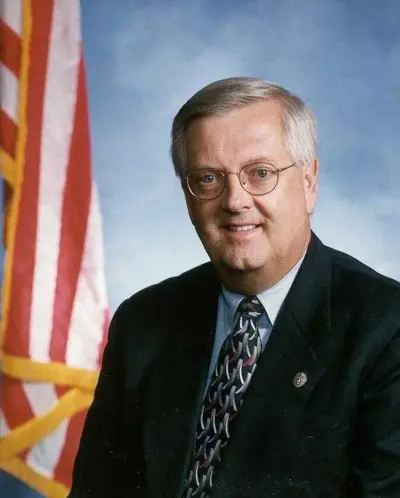
Wayne Curtis Weldon is an American politician. He served as a Republican member of the United States House of Representatives from 1987 to 2007, representing the 7th district of Pennsylvania. He was defeated in November 2006 for reelection by Joe Sestak. Weldon was vice-chair of the Armed Services Committee and the House Homeland Security Committee. He was also the co-chair of the Duma-Congress Study Group, the official inter-parliamentary relationship between the United States and Russia.
