Irving Babbitt Quotes
The papacy again, representing the traditional unity of European civilization, has also shown itself unable to limit effectively the push of nationalism.
Babbitt, Irving. Democracy and Leadership. Houghton Mifflin Company, 1924, p. 138.


Pippin had the opportunity of expanding his empire by conquering the Lombards whose cavalry he could use if and when the Saracen Muslims would invade again. But he would be seizing another Christian country, contrary to the Pope’s edicts, thus losing the blessings of the Pope. Hence the question. He decided to go for the cavalry. Later, Joseph Stalin asked the same question in much different context. See {627524}. Some historians question whether Pippen actually uttered the quotation or just considered it.


In the rest of the Islamic world, the call to prayer was said in Arabic regardless of the national language. This reform was castigated by throughout the Islamic world who wanted Arabic to be the only language for Muslim religious communications. This was not unlike the insistence that they Catholic Church had maintained that all scripture was read in Latin and would not allow Bibles or mass to be said in any other language.


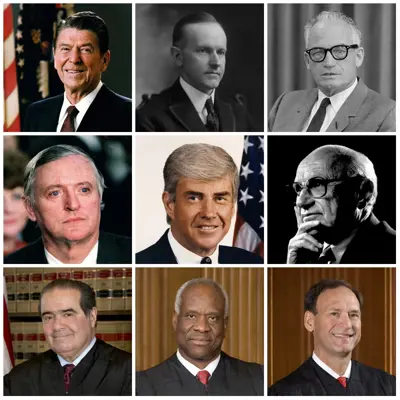
Irving Babbitt was an American academic and literary critic, noted for his founding role in a movement that became known as the New Humanism, a significant influence on literary discussion and conservative thought in the period between 1910 and 1930. He was a cultural critic in the tradition of Matthew Arnold and a consistent opponent of romanticism, as represented by the writings of Jean-Jacques Rousseau. Politically he can, without serious distortion, be called a follower of Aristotle and Edmund Burke. He was an advocate of classical humanism but also offered an ecumenical defense of religion. His humanism implied a broad knowledge of various moral and religious traditions. His book Democracy and Leadership (1924), is regarded as a classic text of political conservatism. Babbitt is regarded as a major influence over American cultural and political conservatism.
