Yusuf Al-Qaradawi Quotes
The Palestinian factions … are not terrorists. Every man has the right to become a human bomb and blow himself up …. The actions … are part of the permitted terror which the Koran talks about …
This is one of the extremist justifications of suicide bombing. Note how he tried to turn suicide bombing into an individual right. Yet he and the Muslim Botherhood do not recognize the right of a person to choose his own religion, or the right of freedom of speech or the press. He also cites the Koran--the Muslim Holy Book--as justification. However, most mainstream Muslim clerics can find nothing in Muslim scripture that could possibley justify the murder of innocent people or the individual suicide. His views are extremist, both politically and theologially.
Sheikh Yusuf al-Qaradawi, Moslem Cleric, Muslim Brotherhood, Statement, September 25, 2001, MEMRI Online
Sourced by: Eigen's Political and Historical Quotations


See {586916} for a passage from the Koran supporting his point.

Son of Reverend Billy Graham. While parts of the Koran do preach violence, parts of the Old Testament also do, as do parts of the New Testament such as the Book of Revelations.

This quotation illustrates the dissentions that exist between the various Islamic terrorist organizations. The Secretary General of Hezbollah herein castigates the rival and more religiously fundamentalist Al Qaeda for killing innocent Muslims. Not only do neither mind killing innocent people who are not Muslims, but Hezbollah indiscriminately fires rockets into Israeli populated areas and has killed innocent Muslims, Christians and Jews. Further, Hezbollah will force Muslim citizens of Lebanon to store arms and allow rocked firing from their properties and institutions like schools, mosques, and hospitals, knowing perfectly well that they minute they do this, under the Geneva conventions, those homes or institutions become a legal target for retaliatory attacks, artillery, air strikes or ground forces and that innocent Muslim civilians would be killed. The levels of terrorist subtlety is difficult for Westerners to comprehend.

Slogans taken from posters listing 10 people targeted by Muslim extremists. Most were people who had said or published material that some fundamentalist Muslims had decided were offensive to Islam. One was Charlie Hebdo, the French Publisher who Islamic terrorists murdered later. Note the Americanisms that the terrorist propagandists adopted. The Wanted Dead or Alive was taken from the posters of the American West of the 19th century. The "Yes we can" was lifted from the Barack Obama 2008 campaign slogan. The "Bullet A Day Keeps the Infidel Away" is a takeoff on the American saying "An apple a day keeps the Doctor away." One of the reasons for these Americanisms was that the founding editor was Samir Khan, self-described American traitor.

He drove a rented SUV into a crowd at a Dining Hall at the University of North Carolina from which he had recently graduated. He was an Iranian-born American citizen who had perceived that American policies and practices abroad led to the death on many Muslims. His interpretation of the Koran agrees with most of the radical, extremist, theologians, but does not comport with the interpretation of moderate Muslim religious thinkers. In 2008, he was convicted and sentenced to 33 years of prison.
A Fatwa is an Islamic theological legal ruling. Islam has no hierarchy. So this Fatwa is not necessarily binding on any Muslims who do not wish to be bound by it. This is one of the relatively few Islamic theological organizations who have taken a public stand against terrorism.


Most sophisticated Muslim theologians would not agree at all with the “permission” he quotes from the Koran. However, there is no hierarchy of belief in Islam and there are tens of thousands of Muslim imams and millions of individual Muslims who believe and teach just what this particular terrorist stated.

Under this interpretation of Islamic law – Sharia – virtually anything regardless of how sinful or immoral under normal circumstances is morally permissible if Islam is being defended from attack. Not all Muslim theologians agree with this principle. See {589498}. There was a similar perversion of theological logic used by Christian Popes during the Crusades.

“Martyrdom” is the euphemism that fundamentalist Muslims use to denote being killed while “fighting for Islam” or on a suicide mission for same. Many believe that such people ascend directly to Paradise where they are given a bevy of virgins and other “perks.” Ironically, this was the last interview that he gave before he himself was “martyred”—he was killed by coalition troops. This mental perspective is one of the reasons that fighting fundamentalist Islamic terrorists is so difficult. They perceive victory whichever way the battle or even the war comes out.

After years of minority Sunni Muslim rule of Iraq, the U. S. invasion gave the majority Shiite Muslims political control. The Sunnis and Shiites have been at each others throats for centuries despite the fact that they are both Muslims. Saudi Arabia is the center of Sunni Islam and many of its religious extremists issue edicts advocating the suicide bombing of Shiite mosques and other facilities and assuring martyrdom for the suicide bombers.

His views are a mix of modernism and fundamentalism. He favors democracy and elections but also favored the Taliban destroying the great ancient Buddha statues when he was called an idol worshipper for urging the preservation of art.

Fanatic Muslims believe that suicide bombers when they blow themselves up have done so to defend Islam and therefore will not only go directly to heaven but will get 72 Virgins when they get there. Most of the suicide bombers are young men with very little or no sexual experience. At the time that Trainor made this remark, there had been an enormous increase in suicide bombers in the Iraq war.

She had been covering Muslim nations and leaders for a long time and saw the relationship between the contemporary domination of Islamic fundamentalism and terrorism long before most.
Most Americans and Europeans and their governments feel that Muslim leaders and organizations have not done very much in terms of “drawing the line” and publicly condemning terrorism. However many of the critics did not understand the intimidation that exists in most Islamic communities where the fascist fundamentalists target any Muslim public critics as heretics and apostates themselves. Many have been killed or injured in assassination attempts.
In most religions, the clerics generally denounce violence especially where innocent people are involved as do many Islamic clerics throughout the world. However, a very large proportion of the Islamic Clergy not only condones violence but actually urges it and uses their interpretation of religious duty to motivate people in that direction. They tend to drown out the pacifistic Muslim clerics and in some cases they call for their death for heresy, thus intimidating many Islamic moderates.

He was the first American that who was assassinated by the Central Intelligence Agency by means of a drone attack. He was a major recruiter for Al Qaeda and he preached to 3 of the 9-11 terrorists.


Most Islamic fundamentalists oppose the education of girls. Malala Yousafzai as a teen ager spoke out encouraging girls to go to school. This offended some of the Taliban fundamentalist terrorist, who threatened her if she continued to speak out. When she continued, they tried to murder her. They shot her in the head, but she was airlifted for medical treatment and survived. She was the winner of the European Sakharov Prize for Freedom of Thought and nominated for the Nobel Prize.
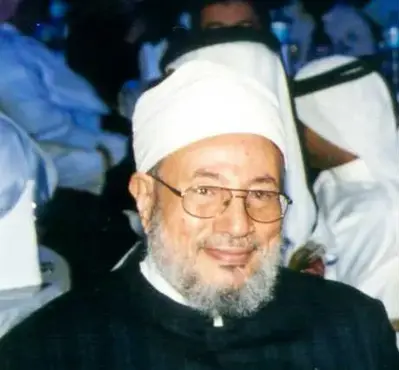
Yusuf al-Qaradawi is an Egyptian Islamic scholar based in Doha, Qatar, and chairman of the International Union of Muslim Scholars. His influences include Hassan al-Banna, Abul A'la Maududi and Naeem Siddiqui. He is best known for his programme al-Sharīʿa wa al-Ḥayāh ("Sharia and Life"), broadcast on Al Jazeera, which has an estimated audience of 40–60 million worldwide. He is also known for IslamOnline, a website he helped to found in 1997 and for which he serves as chief religious scholar.
