Thomas R. Cech Quotes
The overall view of the human genome project has been one of great excitement and positive press, but there are people who have concerns that are quite reasonable, and they are frightened of things they don't understand.
Cech, Thomas R. Interview by Neil A. Campbell. Biology, by Neil A. Campbell and Jane B. Reece, 6th ed., Benjamin Cummings, 2002.

Science was progressing rapidly and Congress and the other legislatures of the world had not kept up with the scientific, legal or ethical implications of the progress. The result was that once a new technique was perfected, all the institutions were caught :flat footed, and sought out bioethicists to advise them.


He was certainly correct. Once we had the human genome, it was bio-scientists who first started rethinking their perspective on life, Then it was physicians and other scientists. Soon the philosophers and theologians reconsidered their views, and then some laypeople and politicians.


Freedman was the producer and narrator of a TV series on sophisticated topics of science. There are a number of jurisdictions in the world where it is not a crime to clone a human being. Once someone implants a clone into a human female, there is little society can do little to “prevent” the clone from being born. Many religious fundamentalists who oppose human cloning will fight to protect the life of the clone baby in utero. For all we know, clones have already been born and are attending school with other children as no one could easily tell that a child (or an adult) is a clone.
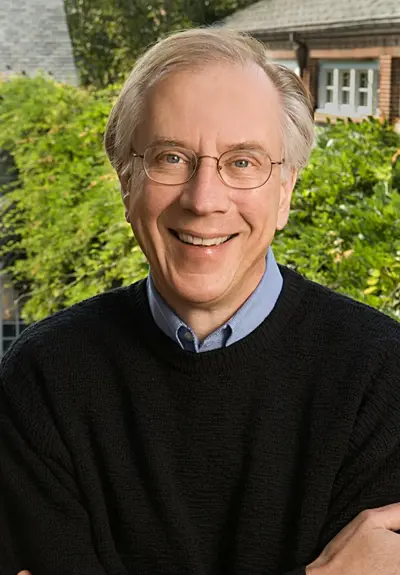
Thomas Robert Cech is an American chemist who shared the 1989 Nobel Prize in Chemistry with Sidney Altman, for their discovery of the catalytic properties of RNA. Cech discovered that RNA could itself cut strands of RNA, suggesting that life might have started as RNA. He also studied telomeres, and his lab discovered an enzyme, TERT (telomerase reverse transcriptase), which is part of the process of restoring telomeres after they are shortened during cell division. As president of Howard Hughes Medical Institute, he promoted science education, and he teaches an undergraduate chemistry course at the University of Colorado.
