Earl Warren Quotes
The only reason that there has been no sabotage or espionage on the part of Japanese-Americans is that they are waiting for the right moment to strike.
Warren, Earl. Testimony before the Select Committee Investigating National Defense Migration, U.S. House of Representatives, 77th Congress, 21 Feb. 1942.

the attack on Pearl Harbor

This statement shortly after the Japanese attacked Pearl Harbor, was remarkably prescient. The last sentence was exactly what happened although at the time some criticized him for being too paranoid about racial matters.

This racist officer was the impetus for one of the terrible wrongs in American history but most of the national establishment and FDR himself signed off on it to his everlasting disgrace. See {587961} and {635792}.


This report was submitted to President Franklin D. Roosevelt, who accepted the recommendation and signed Executive Order 9066. The Japanese on the West Coast were then rounded up and interned by DeWitt in what was one of the lowest and disgraceful points in American history. A national apology was made 34 years later. See {635792}.


Initially when the World War II idea of evacuating Japanese Americans from the West Coast was proposed, General De Witt and replied, “Damned nonsense!”

In large part he was referring to McCarthyism and the Red Scare.


The Proclamation was a belated admission of the disgraceful internment of loyal Japanese Americans during WWII. See {587961}. “Evacuation” was the euphemism for rounding up Japanese American citizens and putting them in internment camps. Not a single Japanese American was involved in any effort to sabotage or undermine the United States. The same cannot be said about the German Americans where a few did work against U. S. interests and yet the German-Americans were never rounded up. The explanation of the difference has been long debated. Racism was a part of it; California paranoia, another. And unfortunately, Japanese Americans owned very desirable land in California and when they could no longer make their payments some interests gobbled up the land and that was a motivation for some. Regardless, it was one of the low points in American history, and warranted this Presidential and national apology.

Wallace was a white, Jewish journalist who was interviewing African American Minister Louis Farrakhan , leader of the Black Muslims on 60 Minutes. Farrakhan's view about whites, his anti-Semitism and animosity toward journalists were on the record and not disguised. This opening of the interview caught Minister Farrakhan by surprise and even with his animosity, he could not help breaking out in a large grin at Wallace's audacity.
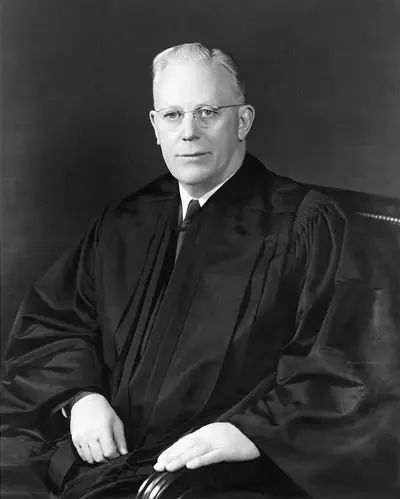
Earl Warren was an American politician and jurist who served as 30th governor of California from 1943 to 1953 and Chief Justice of the United States from 1953 to 1969. The "Warren Court" presided over a major shift in American constitutional jurisprudence, which has been recognized by many as a "Constitutional Revolution" in the liberal direction, with Warren writing the majority opinions in landmark cases such as Brown v. Board of Education (1954), Reynolds v. Sims (1964), Miranda v. Arizona (1966) and Loving v. Virginia (1967). Warren also led the Warren Commission, a presidential commission that investigated the 1963 assassination of President John F. Kennedy. He is the last chief justice to have served in an elected office before entering the Supreme Court, and is generally considered to be one of the most influential Supreme Court justices and political leaders in the history of the United States.
