Wole Soyinka Quotes
The Nation of Islam provides an antidote in the United States to fundamentalist Islam - which is why individuals from America have to go abroad to find radical teachings.
Soyinka, Wole. Climate of Fear: The Quest for Dignity in a Dehumanized World. Random House, 2005.


She had been covering Muslim nations and leaders for a long time and saw the relationship between the contemporary domination of Islamic fundamentalism and terrorism long before most.


Ms. Moran would likely be outraged if a gun manufacturer would not sell her a gun on the grounds that as a Christian she can be assumed to agree with the dozens of verses in the Bible where God called on his followers to kill (and even mutilate), including the killing of insolent children. Most Christians do not take those commands literally just as most Muslims do not take her 109 verses literally. She also refused to allow brown skinned Hindus to patronize her range.
Duran has been the subject of major criticism and attack by many who regard the term as too prejudicial and inflammatory, that there is an automatic association in the term of all Islam and Fascism. While Duran’s position is that the term only applies to extremists who embrace values and actions that were consonant with Fascism, there are other Islamic critics who believe that basic Islam is Fascistic per se and the term should be applied to almost everything Islamic.
Some think that origination credit should go to Malise Ruthven who used the word in an article published in The Independent of September 8, 1990


Son of Reverend Billy Graham. While parts of the Koran do preach violence, parts of the Old Testament also do, as do parts of the New Testament such as the Book of Revelations.


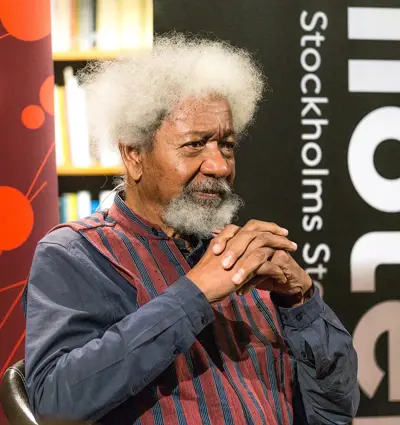
Akinwande Oluwole Babatunde Soyinka, known as Wole Soyinka (pronounced [wɔlé ʃójĩnká]), is a Nigerian playwright, novelist, poet, and essayist in the English language. He was awarded the 1986 Nobel Prize in Literature, the first sub-Saharan African to be honoured in that category. Soyinka was born into a Yoruba family in Abeokuta. In 1954, he attended Government College in Ibadan, and subsequently University College Ibadan and the University of Leeds in England. After studying in Nigeria and the UK, he worked with the Royal Court Theatre in London. He went on to write plays that were produced in both countries, in theatres and on radio. He took an active role in Nigeria's political history and its struggle for independence from Great Britain. In 1965, he seized the Western Nigeria Broadcasting Service studio and broadcast a demand for the cancellation of the Western Nigeria Regional Elections. In 1967, during the Nigerian Civil War, he was arrested by the federal government of General Yakubu Gowon and put in solitary confinement for two years.
