William Shakespeare Quotes
The most peaceable way for you, if you do take a thief, is, to let him show himself what he is and steal out of your company.
Shakespeare, William. Much Ado About Nothing. The Riverside Shakespeare, edited by G. Blakemore Evans, 2nd ed., Houghton Mifflin, 1997, act 3, sc. 3.


Most people reading this think at first that if comes out of the Middle Ages, but it is quite contemporary expressing a point of view that holds that the state is but the instrument of and subservient to God as defined by Protestant Fundamentalism.


This interesting historical quotation illustrates the fact that in almost every American generation there are those who believe that society has gone too far in protecting the rights of criminal suspects at the expense of law and order in the general society. This is nothing new. This is a classic argument given by those who would deny a defendant the Constitutional protection against self-incrimination. The belief that an innocent man has nothing to fear from the police is refuted by the many cases of innocent men being convicted by evidence they have given in the belief that they were innocent, and served long jail sentences only to later be proved by DNA evidence that they could not possibly have been guilty. Since Nott’s day, society has not only found many cases where honest error was made by the police or prosecutors, but many where there was venal prosecutorial misconduct and defendants were jailed even though the authorities were aware of evidence of innocence and kept it secret. There have been a number of these cases where a defendant was on death row and about to be executed when it was found he was innocent. Probably there have been men wrongly executed. See {629444} for a probable example.

Her view was only held by a few British citizens. Capital Punishment was ended in Britain.
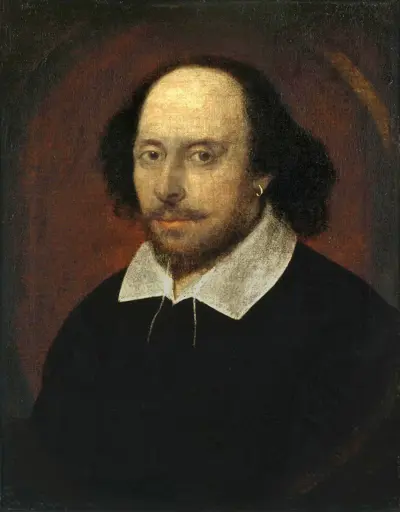
William Shakespeare was an English playwright, poet, and actor, widely regarded as the greatest writer in the English language and the world's greatest dramatist. He is often called England's national poet and the "Bard of Avon" (or simply "the Bard"). His extant works, including collaborations, consist of some 39 plays, 154 sonnets, three long narrative poems, and a few other verses, some of uncertain authorship. His plays have been translated into every major living language and are performed more often than those of any other playwright. They also continue to be studied and reinterpreted.
