Warder Clyde Allee Quotes
The mortal enemies of man are not his fellows of another continent or race; they are the aspects of the physical world which limit or challenge his control, the disease germs that attack him and his domesticated plants and animals, and the insects that carry many of these germs as well as working notable direct injury.
Warder Clyde Allee, 1885-1955, Zoologist, The Social Life of Insects, Chapter 7, 1939
Sourced by: Eigen's Political and Historical Quotations


The white Europeans had over centuries built up immunity to some of the worst infectious diseases but when they first landed in the New World brought smallpox and other deadly diseases to which the Indians had no immunity.


A good example is Malaria. It is spread by mosquitos, mostly in the warmer seasons when they breed in large numbers. If there are longer warm seasons, there will be a longer transmission season and more people will be infected with Malaria. Similar situations exist with many other diseases.

Sachs was commenting on the tendency of some to blame all the problems of Africa on corruption and bad governance.

This is an amazing quotation and shows that the Ancient Romans who had a very sophisticated medical technology had a notion of germs and microbes. Ancient Rome was the first organized nation for which health, medicine, public health, and medical research were governmental functions unlike Greece and other civilizations where health was a personal function. Roman policy emphasized prevention unlike the Greeks. Sanitation and water supply and quality were government responsibilities and the Roman standard was not reached in the rest of the world until the 18th century. Heath and medicine was also a major military responsibility. The Roman Empire depended on its army, and trained professional soldiers. Disease was a greater risk to the soldiers than were battlefield casualties, and the Romans had a strong vested interest in keeping these highly trained men alive and healthy—not just the wealthy Roman citizens. The Romans were open to techniques that were developed throughout the Empire and beyond and tended to adopt all good ideas and a few bad ones as well While they had advanced surgery, the public health was the strongest aspect of Roman medicine and health and this notion of germs and disease. Remember that the writer was not a medical or scientific man, but was just indicating what was general wisdom of the Roman elite.


This is a historically significant quotation as it shows that Bassi, prior to Pasteur, discovered the germ theory of disease. Pasteur had a portrait of Bassi in his office.


He is in charge of collecting and deploying the funds donated for infectious diseases from countries throughout the world. Each nation has its own budget cycle and the public health officials have to plan and act as soon as they learn that an epidemic is breaking out. The viruses and bacteria grow when they grow, not when budgets have planned for them.


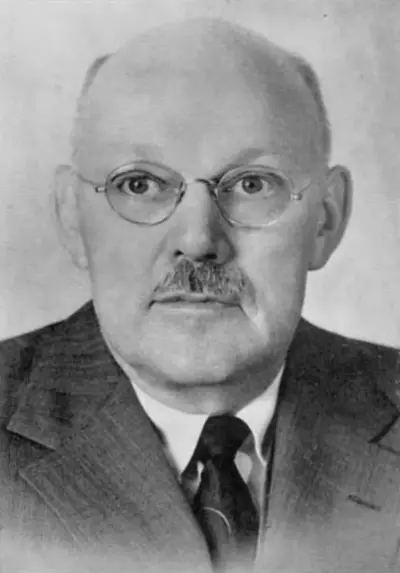
Warder Clyde Allee was an American ecologist. He is recognized to be one of the great pioneers of American ecology. As an accomplished zoologist and ecologist, Allee was best known and recognized for his research on social behavior, aggregations and distributions of animals in aquatic as well as terrestrial environments. Allee attended Earlham College and upon his graduation in 1908, pursued advanced studies at the University of Chicago where he received his PhD and graduated summa cum laude in 1912. Allee's most significant research occurred during his time at the University of Chicago and at the Marine Biological Laboratory at Woods Hole in Massachusetts. His research findings led to many publications, with the most notable being Principles of Animal Ecology and Animal Aggregations. Allee was married to author Marjorie Hill Allee and remained active in the field of biology until his death in 1955 at the age of 70.
