Ludwig von Mises Quotes
The mixing of politics and business not only is detrimental to politics, as is frequently observed, but even much more so to business.
Mises is one of the very few economic conservatives who opposed companies getting involved with lobbying or politics in any way. He, like some others, saw the negative public effect that business produces when it does get deeply involved in politics, but he uniquely observed that the businesses themselves suffered as a result of the involvement in politics. Obviously very few business leaders of the 21st century agreed with Mises’ earlier views.
Ludwig von Mises, 1881-1973, Austrian Economist & Political Philosopher, A Critique of Interventionism, 1929
Sourced by: Eigen's Political and Historical Quotations


While New York City and a few other jurisdictions—states and local—have more stringent laws and ethical standards for politicians than does Congress and Federal Officials, but most have lower standards. In some of the jurisdictions judges can try cases and rule in favor of a company or wealthy individual who gave the judge the money to campaign with and get elected.

In 1987 Toshiba Corporation of Japan illegally sold sophisticated technical equipment to the Russians. Congress was considering legislation that would punish Toshiba, but the proposed sanctions were softened:


Trump often used the phrase "Drain the swamp" in his campaigning to mean get ride of the establishment figures who had, for the most part, dominated politics, for decades. When he was elected, he had to appoint a cabinet, but when he did so, it was almost exclusivly made up of people who had been a part of the political and corporate establishment -- the swamp.


Chomsky sees this as a problem. Many others see it as a virtue that government agencies receive current information from companies and that there is an exchange of personnel where company officials bring their experience to assist government and corporations benefit from having executives who had some government experience.

Rove had bridged the traditional gap between the right wing Religious fundamentalists and large business, industrial, heavy donors to the party. These groups usually diverged on economic policy and cultural values however Rove had convinced both that they should tolerate the other for the sake of maintaining power for President George W. Bush who delivered enough to each to hold them in coalition. Rove’s style tended to moralize everything for the religious right including their cooperation with major exploiters of economic self-interest. Rove’s religious tactics which were so successful was a subject of great interest and analysis, especially since Rove himself was an agnostic.

Begala was commenting on a newspaper expose that President Bush had appointed over 100 lobbyists to administrative government posts in the area for which they had previously lobbied.


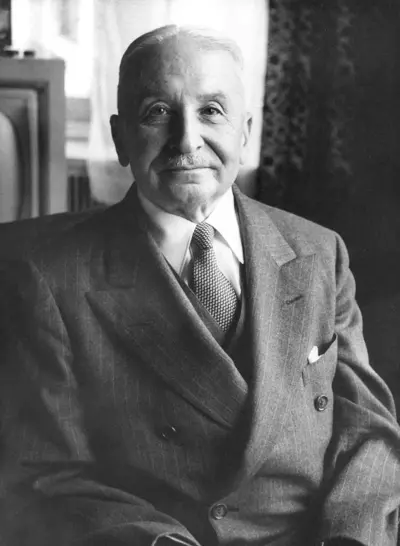
Ludwig Heinrich Edler von Mises was an Austrian School economist, historian, logician and sociologist. Mises wrote and lectured extensively on the societal contributions of classical liberalism. He is best known for his work on praxeology, a study of human choice and action.
