Thomas Aquinas Quotes
The meaning of what is said is according to the motive for saying it: because things are not subject to speech, but speech to things. Therefore we should take account of the motive of the lawgiver, rather than of his very words.
Aquinas, Thomas. Summa Theologica. Translated by Fathers of the English Dominican Province, Benziger Bros., 1947, Part I-II, Question 96, Article 6.


Justice Holmes was explaining the shortcoming of taking words, spoken or written, literally and not looking further to try and determine the actual intent. This becomes a major legal issue when trying to determine the original intent of legislators of the framers of the Constitution. We all have written things which when interpreted to by others end up with a meaning different from what we intended. In the legislative process with the negotiations over wording, committees, and tradeoffs, it is often very hard to determine what the originators had in mind for in many situations they disagreed about the issue but ended up compromising on some specific language which might represent a consensus or might not even represent anyone’s view.


Instructing reporters on how to cover Chicago Mayor Richard Daley who was known for his ability to butcher the English language:


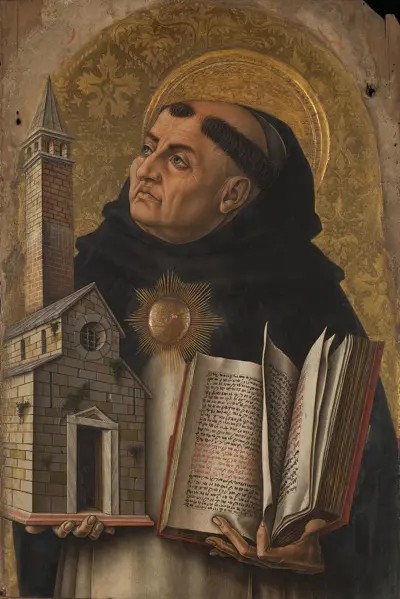
Thomas Aquinas was an Italian Dominican friar, philosopher, Catholic priest, and Doctor of the Church. An immensely influential philosopher, theologian, and jurist in the tradition of scholasticism, he is also known within the latter as the Doctor Angelicus, the Doctor Communis, and the Doctor Universalis. The name Aquinas identifies his ancestral origins in the county of Aquino in present-day Lazio, Italy. Among other things, he was a prominent proponent of natural theology and the father of a school of thought (encompassing both theology and philosophy) known as Thomism. He argued that God is the source of both the light of natural reason and the light of faith. His influence on Western thought is considerable, and much of modern philosophy developed or opposed his ideas, particularly in the areas of ethics, natural law, metaphysics, and political theory.
