Basil Fernando Quotes
The main difference in the conceptual framework of a democracy as compared to various Asian regimes is that these regimes do not accept equality as the fundamental basis of their societies …. It is no exaggeration to say that equality is being treated as an alien concept by a large section of the elite in Asia
Basil Fernando, Executive Director, Asia Human Rights Commission, Hong Kong, Speech, Berlin, Germany, September 2002
Sourced by: Eigen's Political and Historical Quotations


There was a March on Washington planned for 1942. However, the leaders were persuaded to call it off as the United States was in the midst of the Second World War. The military was segregated and so were the defense plants. FDR made some concessions regarding defense jobs but discrimination was still rampant. It would be 20 years later when the March actually took place with some of the same leaders organizing it.

De Tocqueville was generally concerned about what he saw as an inherent conflict between freedom and equality. Efforts to produce equality can lead in some cases to impingements on some freedoms or rights. Unlimited free rights can produce inequality and a de facto autocracy. Even in modern times America is struggling to find a proper balance.


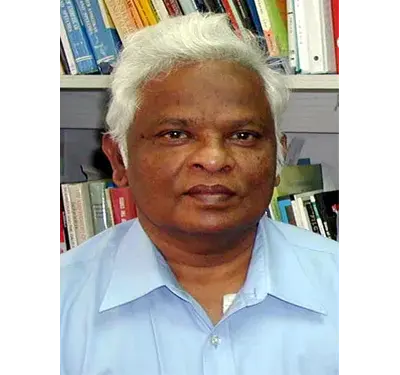
W.J. Basil Fernando is a Sri Lankan jurist, author, poet, human rights activist, editor of Article 2 and Ethics in Action, and a prolific writer. He was educated at St. Anthony's College, Wattala and St. Benedict's College, Kotahena. He earned a LLB from the University of Ceylon in 1972, registered as an Attorney-At-Law of the Supreme Court of Sri Lanka in 1980 and practised law in Sri Lanka up to the end of 1989. He became a legal adviser to Vietnamese refugees in a UNHCR-sponsored project in Hong Kong. He joined the United Nations Transitional Authority (UNTAC) in 1992 as a senior human rights officer and later also served as the Chief of Legal Assistance to Cambodia of the UN Centre of Human Rights (now the UN High Commissioner of Human Rights office). He is associated with Asian Human Rights Commission and Asian Legal Resource centre, based in Hong Kong since 1994. In 2014, he was awarded the Right Livelihood Award for "his tireless and outstanding work to support and document the implementation of human rights in Asia."
