Benjamin N. Cardozo Quotes
The judges’ individual sense of justice ... might result in a benevolent despotism if the judges were benevolent men. [But] It would put an end to the reign of law
Benjamin N. Cardozo, 1870-1938, Supreme Court Justice, The Nature of the Judicial Process, 1921
Sourced by: Eigen's Political and Historical Quotations

Jefferson, like most Presidents and ex-presidents, had his concerns about the judiciary and judicial checks, especially of the Executive Branch.

Many of our Founding Fathers held the view that the Jurors should decide not only about the facts but also they have the final decision on the law. The concept of the jury not following the judge’s interpretation and instructions as to the law is called Jury Nullification of which many of the founders approved. In modern times however, most states require the jury to accept the judge’s instructions as to the law, and the Jury’s only role is to decide on the facts. Maryland is the only state left which allows the jury to make the final decision on the law as well as the facts. However, many jurors will silently nullify the Judges instructions and vote accordingly as jurors need not explain their reasoning in most jurisdictions. See {641742}, {590841}, {591140} & {591139} for similar views by other Founding Fathers.

White was not confirmed.


Others argue that the prosecutors are the weakest link in the system. See {631696}.


In the 1970s in America conservatives were complaining about judicial activism by liberal judges while in England at the time liberals were complaining about conservative judges’ judicial activism.


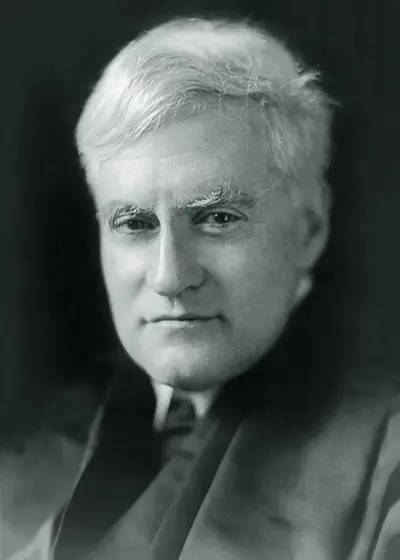
Benjamin Nathan Cardozo was an American jurist who served on the New York Court of Appeals and later as an Associate Justice of the Supreme Court. Cardozo is remembered for his significant influence on the development of American common law in the 20th century, in addition to his philosophy and vivid prose style. Cardozo served on the Supreme Court six years, from 1932 until his death in 1938. Many of his landmark decisions were delivered during his eighteen-year tenure on the New York Court of Appeals, the highest court of that state.
