Robert Nozick Quotes
The illegitimate use of a state by economic interests for their own ends is based upon a preexisting illegitimate power of the state to enrich some persons at the expense of others. Eliminate that illegitimate power of giving differential economic benefits and you eliminate or drastically restrict the motive for wanting political influence.
Nozick, Robert. Anarchy, State, and Utopia. Basic Books, 1974, p. 272.


Rove had bridged the traditional gap between the right wing Religious fundamentalists and large business, industrial, heavy donors to the party. These groups usually diverged on economic policy and cultural values however Rove had convinced both that they should tolerate the other for the sake of maintaining power for President George W. Bush who delivered enough to each to hold them in coalition. Rove’s style tended to moralize everything for the religious right including their cooperation with major exploiters of economic self-interest. Rove’s religious tactics which were so successful was a subject of great interest and analysis, especially since Rove himself was an agnostic.


The “regulation” to which Franklin objected was not the type of regulation we have today. It was generally limited to the granting of monopolies to individuals or their companies if they would institute a service that was perceived as beneficial by the public as a whole. For example, a company might build steamboats and provide regular service across a river or along it. The company would argue that the initial cost and investment is so great, that they are entitled to a period of protection so that they can be sure of getting their investment back. In most cases, they would have made the investment, monopoly or not, and in many cases the public officials are unsophisticated and make a bad deal; in others there was (and is) outright corruption. Countries like Norway, have been so burned by the problem Franklin observed, that they try to avoid even government monopolies of service. They for example, have private and public light rail commuter lines which continuously compete against each other.


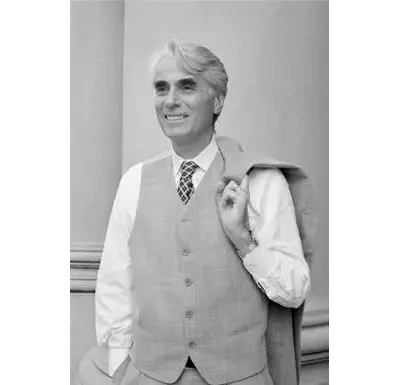
Robert Nozick was an American philosopher. He held the Joseph Pellegrino University Professorship at Harvard University, and was president of the American Philosophical Association. He is best known for his books Philosophical Explanations (1981), which included his counterfactual theory of knowledge, and Anarchy, State, and Utopia (1974), a libertarian answer to John Rawls' A Theory of Justice (1971), in which Nozick also presented his own theory of utopia as one in which people can freely choose the rules of the society they enter into. His other work involved ethics, decision theory, philosophy of mind, metaphysics and epistemology. His final work before his death, Invariances (2001), introduced his theory of evolutionary cosmology, by which he argues invariances, and hence objectivity itself, emerged through evolution across possible worlds.
