William Graham Sumner Quotes
The greatest question of all about American democracy is whether it is a cause or a consequence. It is popularly assumed to be a cause, and we ascribe to its beneficent action all the political vitality, all the easiness of social relations, all the industrial activity and enterprise which we experience and which we value and enjoy. I submit, however, that, on a more thorough examination of the matter, we shall find that democracy is a consequence. There are economic and sociological causes for our political vitality and vigor, for the ease and elasticity of our social relations, and for our industrial power and success. Those causes have also produced democracy, given it success, and have made its faults and errors innocuous
William Graham Sumner, 1840-1910, Political Scientist & Philosopher, The Absurd Effort To Make The World Over, March 1894
Sourced by: Eigen's Political and Historical Quotations


Goldman, Alexander Berkman, Eugene Debbs, and many other leading intellectuals went to jail for opposing the draft, a violation of a law of the time. She served 22 months. She was a vigorous proponent of freedom of speech.


Vladimir Lenin. Some anti-democratic, rabid opponents of communism used this quotation to argue that democracy was just a step on the way to Communism and thus democracy was a part of the communist conspiracy—an extreme form of Red Scare.


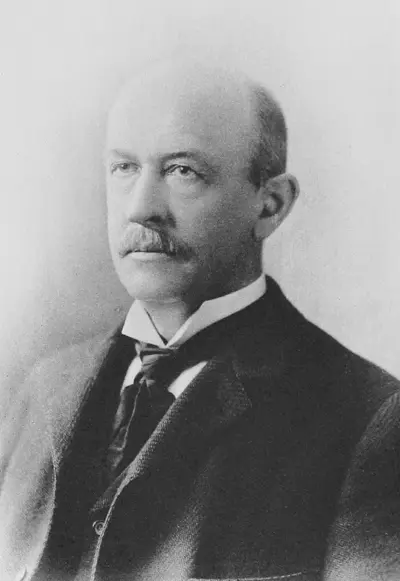
William Graham Sumner was a classical liberal American social scientist. He taught social sciences at Yale, where he held the nation's first professorship in sociology. He was one of the most influential teachers at Yale or any other major school. Sumner wrote widely within the social sciences, with numerous books and essays on American history, economic history, political theory, sociology, and anthropology. He supported laissez-faire economics, free markets, and the gold standard. He adopted the term "ethnocentrism" to identify the roots of imperialism, which he strongly opposed, and as a spokesman against it he was in favor of the "forgotten man" of the middle class, a term he coined. He had a long-term influence on conservatism in the United States.
