David Brin Quotes
The greatest hypocrisy on the planet right now is for those who defend capitalism to not be in favor of radical transparency, for all of us to know who owns everything. And that is my militant, radical, moderate, pro-capitalist, pro-Enlightenment, ferocious stand.
Brin, David. Contrary Brin, davidbrin.blogspot.com, 2012.


Samuel Langhorne Clemens, 1835-1910. Ironically, during the McCarthy period and the Red Scare of the 1950s, some of the right wingers charged that Mark Twain’s writing was “Communist Propaganda”. Most of the accusers had never read most of Train’s work. At the time, the Communists had condemned the racial segregation that was then legal in America and most of the staunch Southern segregationists accused anyone who attacked segregation as a communist. Twain was one of the leading voices against American racism. As for communism, the accusers of Train had probably never read this particular quotation. Twain was an early severe critic of communism and used his favorite weapon—humor—to attack it.


He was referring to the fact that Google was performing a wonderful public service of indexing and making searchable and readable all the books in the Harvard and other major libraries.


The President had decided to aggressively push for railroad regulation to end the rate rebate abuses that were used to support the monopolies like Standard Oil. In vintage Roosevelt tactics, he gave his first major speech on the subject in the setting and forum that would be most opposed to it. The Union League Club of Philadelphia in included the wealthiest men in the area where were most opposed to any Federal Regulation of anything. All the major railroad executives and stock owners and traders were also members. The President wanted to persuade the opponents to change their positions, and sometimes he did. He also was driven by his concept of sports and athletics so that the “opposition” should have “fair notice” for the contest ahead.


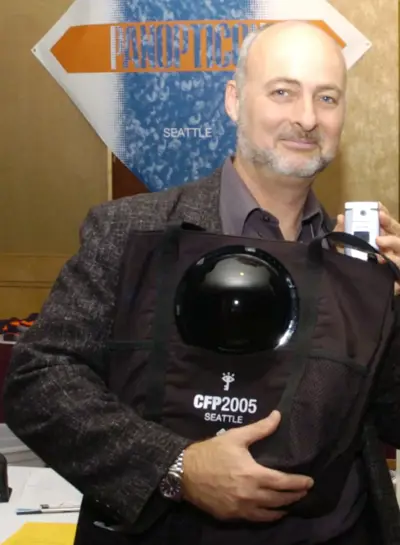
Glen David Brin is an American scientist and author of science fiction. He has won the Hugo, Locus, Campbell and Nebula Awards. His novel The Postman was adapted into a 1997 feature film starring Kevin Costner.
