A. J. Muste Quotes
The great mass of 18-year olds ... are given no choice.... The older generation immolates the younger, on the alter of Moloch ]. What God, centuries ago, forbade Abraham to do even to his own son,—"Lay not thy hand upon the lad, neither do thou anything unto him" [Genesis 22:12]—this we do by decree to the entire youth of a nation.
see Leviticus 20:2; Jeremiah 32:35; II Kings 23:10
A. J. Muste, 1885-1967, Clergyman & Pacifist, Of Holy Disobedience, 1952
Sourced by: Eigen's Political and Historical Quotations

The founder was Charles E. Coughlin, 1891-1979, a demagogic Catholic Priest who drafted the principles and invited others to join him. Hundreds of thousands did in this organization which began in idealism, and ended in scandal and hate mongering, so much so that Father Coughlin was ordered off the radio and out of politics by the Catholic Church. The National Union in 1936 had morphed into the Union Party which ran Presidential candidates in the 1936 election. In this principle there were two purposes: First to have the wealthy sacrifice something in time of war. Historically wealth could keep a man from the draft if he so wanted. Second, when the company went to war the argument went it was the rich who could profit who had more political influence and could make the war. This way, they would pay a high price and might oppose war. Many of Coughlin’s followers were pro-German and wanted to keep the country out of the European war.


Debs was jailed for sedition for this speech.
In the Civil War a drafted conscript could pay money instead of serving in the army. Many rich and middle class men did so leaving a higher proportion of the poor to be drafted. The song is sometimes misattributed to William Cullen Bryant.


This quotation is a wonderful illustration of the change that has taken place in the American military. The young man who was not skilled enough for anything else was meant to be a soldier. By 2010 only one in four high school graduates would be skilled and intelligent to be qualified for the Untied States Navy. The other services also had high requirements in order to function with the high technology, of the modern military.

The Centograph is a war memorial monument in London. On Remembrance Day, a British Patriotic Holiday, veterans march past the Centograph. The quotation is text uttered by one of her characters.

The General had differed with the George W. Bush Administration neoconservatives over the strategy regarding the invasion and war in Iraq. He was pushed out of office as a result. Later, it was clear that he was right originally, and the press, some members of Congress and others wanted him to comment. He refused.


Moltke’s plan for the Marne Campaign did not work out as planned and he and the Kaiser had a difference of opinion so Moltke was replaced as military commander. This quotation is of critical importance as it shows that the Germans were actually planning the First World War and simply used the assassination of Archduke Ferdinand as an excuse. Thus, the reparations Germany was required to pay when they lost the war. See {642096} for more quotational evidence.

Wood was one of the first to call for conscription for a peacetime army as well as in wartime.


Marshall was then the chief of staff of the army. He was staving off a Congressional attempt to eliminate the draft.


This principle became the Civil War Draft. Ironically, when the draft was legislated by Congress, there were relatively few men drafted as enlistments increased. See {621897} .

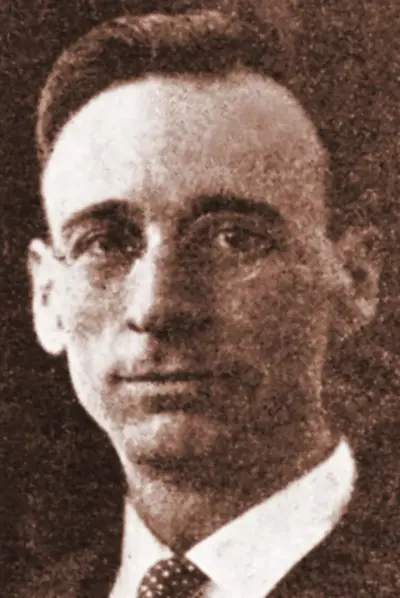
Abraham Johannes Muste was a Dutch-born American clergyman and political activist. He is best remembered for his work in the labor movement, pacifist movement, antiwar movement, and civil rights movement.
