William Hazlitt Quotes
The great have private feelings of their own, to which the interests of humanity and justice must curtsy. Their interests are so far from being the same as those of the community, that they are in direct and necessary opposition to them; their power is at the expense of OUR weakness; their riches of OUR poverty; their pride of OUR degradation; their splendour of OUR wretchedness; their tyranny of OUR servitude.
Hazlitt, William. "What is the People?" Political Essays, with Sketches of Public Characters, London, William Hone, 1819, p. 306.


Although Rand is one of the Conservatives' favorite writers and philosophers, only a minority would agree with her unfeeling and extreme form of a capitalistic society.


unions and federations of two countries

Ingersoll was considered to be the greatest orator and political thinker of his day, but his overt atheistic views curtailed his elected political career.


The term “rugged individualism” was used at the time be very conservatives and the very wealthy to describe business leladers with words that had very good public connotations. They argued that it would be undesirable to curtail their individualism that was so important by any government regulations or laws that would limit what the business leaders could do. However, the reality was that these very successful and powerful “rugged individualists” had regimented most everyone else—employees, consumers, and small businessmen who might sell them services or products. To Tugwell, if the wealthy and powerful few had no restrictions on their individualism, there would be precious little individualism for most of society. He sought a balance of regulating the individualism and prerogatives of the few somewhat in order to allow the vast majority of people to be able to have individuality as well.


Diamond’s observation refers to major technologies like farming and ability to use metals.


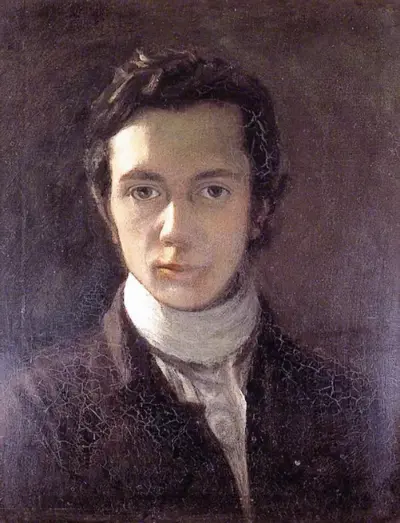
William Hazlitt was an English essayist, drama and literary critic, painter, social commentator, and philosopher. He is now considered one of the greatest critics and essayists in the history of the English language, placed in the company of Samuel Johnson and George Orwell. He is also acknowledged as the finest art critic of his age. Despite his high standing among historians of literature and art, his work is currently little read and mostly out of print.
