Joseph B. Wirthlin Quotes
The Gospels record that nearly everywhere the Savior went, He was surrounded by multitudes of people. Some hoped that He would heal them; others came to hear Him speak. Others came for practical advice. Toward the end of His mortal ministry, some came to mock and ridicule Him and to clamor for His crucifixion.
Wirthlin, Joseph B. "The Great Commandment." Ensign, Nov. 2007, p. 28.


At that time, and in much of the world today, religious preaching and those who do it are licensed by the state. Lucian’s response was one of the first statements that governments and temporal powers endorsement was not required, nor was any formal ordination or grant of authority from a formal church as existed among the pagans of the time where the religion was seen as another extension of the state. Even in America there is some ambivalence on this point. Many religions require not only training but a grant of authority from the religious hierarchy. Others such as some Baptists and many Protestant Fundamentalist groups believe that no specific authority is needed other than the “calling of god.” Lucian was apparently the first person to claim the authority as an individual. He was burnt alive for his position. There is a second Saint Lucian. To distinguish the latter is often referred to as Saint Lucian the Syrian.

You’re better than Christ. Christ made twelve guesses and blew one. He couldn’t get twelve good men.
Castigation of an administration witness who claimed to have made a number of correct decisions. Hebert’s reference was to Judas, the Apostle selected by Jesus who betrayed him.


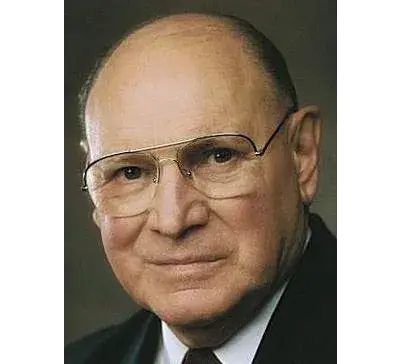
Joseph Bitner Wirthlin was an American businessman, religious leader and member of the Quorum of the Twelve Apostles of The Church of Jesus Christ of Latter-day Saints (LDS Church). He was sustained to the Twelve on October 4, 1986, and ordained an apostle on October 9, 1986, by Thomas S. Monson. He became an apostle following the death of church president Spencer W. Kimball. As a member of the Quorum of the Twelve, Wirthlin was accepted by the church membership as a prophet, seer, and revelator.
