Karl Liebknecht Quotes
The Free Socialist Republic of Germany
Others proclaimed the republic as well and a power struggle ensued.
Karl Liebknecht, 1871-1919, German Member of Parliament, Party Leader of the Sparticus Socialist Party, Declaration as Kaiser Wilhelm II abdicated, November 9, 1918
Sourced by: Eigen's Political and Historical Quotations


After the 1917 Russian Revolution many of the Western Countries sent troops to Russia where they aided the Whites against the Reds. When the Red Bolsheviks prevailed, there were many attempts to diplomatically and economically undermine the Communist government. This caused a unity among different Russian factions. Sforza urged leaving them alone and letting the Bolsheviks fail by their own ideology. Most Western nations and the United States did not agree with him.


So often in America, citizens and government officials have made alliances or joined organizations under the theory that “the enemy of my enemy must be my friend.” It has almost always been a mistake ranging from joining the Communist Party in the 1930s to supporting the dictators or the Middle East, Asia, and South America. In the 1930s Fascism was growing and already on the march and neither America nor England—the leading democracies were not doing anything to combat the threat. America was emerging from the Great Depression, had a string Isolationist movement, and a small but influential group of Fascists and Hitler enthusiasts. Also, no one outside of Russia knew about the Stalin atrocities.


Hoover’s testimony not withstanding, communism in America never did spread like an epidemic.

Advocating a revolution against the Karenski provisional government: Vladimir Lenin


This is an example of what made the Cold War so difficult. The Italian Communists had great misgivings about the Russian version of Communism that tended to abuse human rights and try and control other countries. However, when the Russian Communists were under world attacks by the West, as with their incursion into Hungary, he urged that all the Communists stick together and defend the Russians even for policies that they thought wrong. On the West side, the same thing occurred. The United States tolerated and supported a number of terribly oppressive dictatorships that were virulently anti-Communist. Polarization was the international norm.


The reason this is an important quotation is that since the end of WWII, most Americans have used the term “socialism” rather loosely. President Obama for example is often referred to as a socialist by his political enemies. Conservatives refer to Norway, Sweden and Denmark and other European nations as socialist states. But none of them would ever meet the definition of a socialist state of the major socialist state in history. After WWII, the Russians intimidated many of the Eastern European with force of arms and there were some other socialist states for a while but the all abandoned Soviet style Russian socialism, Ironically, the only state that the old Russian Communists would recognize in 2011 was Cuba. However, there are many who call themselves socialists who would never agree that the Soviet Union was remotely a socialist state—they see it as a Fascist dictatorship.


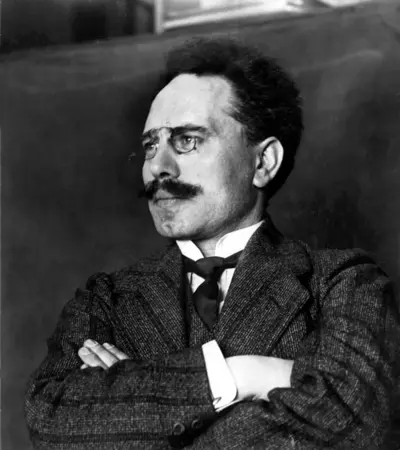
Karl Paul August Friedrich Liebknecht (German: [ˈliːpknɛçt] (listen); 13 August 1871 – 15 January 1919) was a German socialist politician and theorist, originally of the Social Democratic Party of Germany (SPD) and later a co-founder with Rosa Luxemburg of the Spartacist League and the Communist Party of Germany, which split from the SPD after World War I. He is best known for his opposition to the war in the Reichstag and his role in the Spartacist uprising of January 1919. The uprising was crushed by the SPD government and the Freikorps (paramilitary units formed of World War I veterans), which summarily executed Liebknecht and Luxemburg.
