Georg C. Lichtenberg Quotes
The fly that doesn't want to be swatted is most secure when it lights on the fly-swatter.
Lichtenberg, Georg Christoph. The Waste Books. Translated by R. J. Hollingdale, New York Review Books, 2000.


The bipartisan Presidential Commission had unanimously made 41 recommendations to prevent future terrorist attacks. While the Bush Administration and Congress implemented a few many of the more critical ones were left unaddressed. The commission on its final day issued a report card giving failing grades to both the White House and the Republican-controlled Congress.


The Catawabas fought in the South with the English against the French and Spanish. In this case they asked for “military assistance” which was provided in terms of the fort which was built and provision of powder and ammunition. Later the Catawabas sided with the Americans in the Revolution.
A very passionate minority of India’s Muslims demanded a separate Islamic State (that would become Pakistan) but Hindu’s and Muslims were mixed throughout India and many Indians and British were concerned that there would be a bloodbath if the plans for independence went forward. When the decision had been made to partition India, Radcliffe had the unenviable task of deciding where the boundary was to be between Pakistan and India. No one on either side was satisfied with his effort. So, realizing that violence was about to break out, he packed quickly and went back to England. Over two million Indians were killed in the violence that broke out in the next weeks as there was a huge migration and ethnic cleansing to implement Radcliffe’s boundaries. Fifty years later, both India and Pakistan acknowledge that Radcliffe did a very reasonable job.


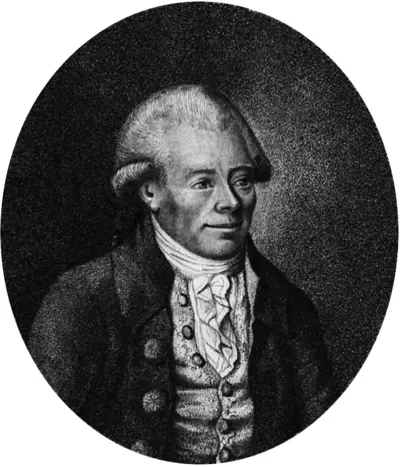
Georg Christoph Lichtenberg was a German physicist, satirist, and Anglophile. As a scientist, he was the first to hold a professorship explicitly dedicated to experimental physics in Germany. He is remembered for his posthumously published notebooks, which he himself called Sudelbücher, a description modelled on the English bookkeeping term "scrapbooks", and for his discovery of tree-like electrical discharge patterns now called Lichtenberg figures.
