Francis Amasa Walker Quotes
The first thing to be said respecting any serious proposition importantly to restrict immigration into the United States is, that such a proposition necessarily and properly encounters a high degree of incredulity, arising from the traditions of our country. From the beginning, it has been the policy of the United States, both officially and according to the prevailing sentiment of our people, to tolerate, to welcome, and to encourage immigration, without qualification and without discrimination. For generations, it was the settled opinion of our people, which found no challenge anywhere, that immigration was a source of both strength and wealth.
The huge waves of Eastern European immigrants, and the severe recession of the nation began to change public attitudes on immigration. Wage rates were going down as a result of the depression and the terribly poor immigrants would work for any low pay and inadvertently, the immigrants help suppress wages. Ironocally, those same immigrants who would work for any pay and conditions were among the leaders of the labor movement and the strikes for better wages and working conditions. See {625086}
Francis Amasa Walker, 1840–1897, Economist & Statistician, President of the American Statistical Association, President of the National Academy of Sciences, President of the American Economic Association, President, Massachusetts Institute of Technology, Army General, Summary of the American History of Immigration up to that time, “Restriction of Immigration”, The Atlantic Monthly; June, 1896
Sourced by: Eigen's Political and Historical Quotations

The “strike” was that of the Cloak Workers in New York. The workers were generally Russian Jewish Immigrants who were paid the lowest wages then of any ethnic group. See {625087}


Ironically, where national quotas have been used in American immigration policy, it has rarely been used to keep nationals of countries with which we were having difficulty, out. In almost all cases, the national quotas have been used to discriminate against racial and religious minorities in America. Asians, Blacks, Hispanics, Catholics, Mormons and Jews have been the most frequent groups targeted. Even when we were in the midst of the Cold War, American policy was to accept immigrants from the Soviet Union and Cuba enthusiastically.


The racial targets of the Japanese and Korean Exclusion League widened and they changed their name to the Asiatic Immigration Exclusion League.

He was referring to North African and other third world immigrants. France’s second largest ethnic group had become Muslims from North Africa. But they were only 10 percent of the population.
This is a very important historical quotation. When the anti-Asian racists first organized into a League, their racism was offensive to most national politicians and Eastern business and political leaders. However, this changed quite rapidly. It illustrates the constant vigilance that has to be maintained to condemn racism whenever it erupts last that was anathema becomes fashionable. The extremes become the norm. These minutes were taken when the League was still operating under the name of the “Japanese and Korean Exclusion League”.
Most immigration reformers want to open immigration more widely. Ward wanted immigration restricted to certain ethnicities and limited. He wanted a uniformity of assimilation and not diversity.


Not all segments of the Republican Party perceived that they needed immigration reform. Some greatly feared more non-whites coming into the country and ending the traditional majority of whites. After the 1964 Civil Rights Bill was passed, almost all the racist Democrats of the “solid South” switched to the Republican Party and the last thing they want is to allow the 11 million mostly Hispanic and/or Black undocumented immigrants to become citizens and vote.


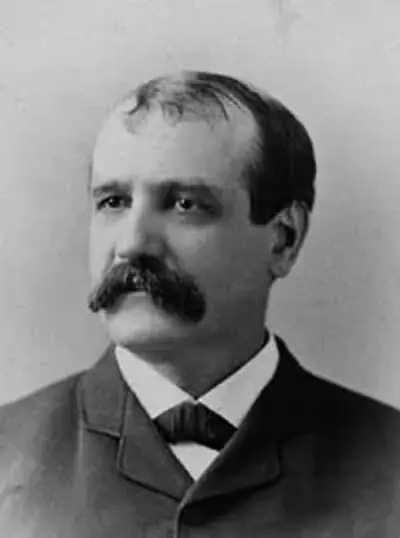
- Born: July 2, 1840
- Died: January 5, 1897
- Nationality:
- Profession: Economist, Statistician, Civil Servant, Military Officer, University President
Francis Amasa Walker was an American economist, statistician, journalist, educator, academic administrator, and military officer in the Union Army.
