Libanius Quotes
The festival of Kalends [the new year] is celebrated everywhere as far as the limits of the Roman Empire extended….Everywhere may be seen carousels and well-laden tables. Luxurious abundance is found in the houses of the rich. But also in the houses of the poor better food than usual is put upon the table. The impulse to spend seizes everyone …. People are not only generous towards themselves but also towards their fellow men. A stream of presents pours itself out on all sides…. The Kalends festival banishes all that is connected with toil and allows men to give themselves up to undisturbed enjoyment.
At this time the Empire was Christian. However, Christians did NOT then celebrate Christmas, This holiday festival contains the eating and drinking and merriment of modern New Years celebrations, but also had the materialism, generosity, gift-giving and good will of modern Christmas.
Libanius, 314–394, Greek Sophist, Description of the New Year Holiday Celebration throughout the Roman Empire
Sourced by: Eigen's Political and Historical Quotations

This is a fascinating several day holiday in that it not only was a time of required merriment, but all parts of society participated and the normal inequities of Roman society were “reformed” and eliminated for the holiday period. Thus it acted as a safety valve. Consider the notion that such a holiday were celebrated in the slave-holding South. It would not be possible. Roman slavery was understood by all to be a matter of luck and circumstances. Often slaves were much better educated than their masters or better businessmen or soldiers. American slavery was much more hypocritical where the whites created an intellectual justification of the slavery by the inferiority of the Blacks. Giving slaves “equal rights” for a holiday would collapse the edifice they had created. So it took a war to collapse it.


This is one of the proverbs of King Solomon of the Jews, son of King David.


3rd Earl Russell of Kingston
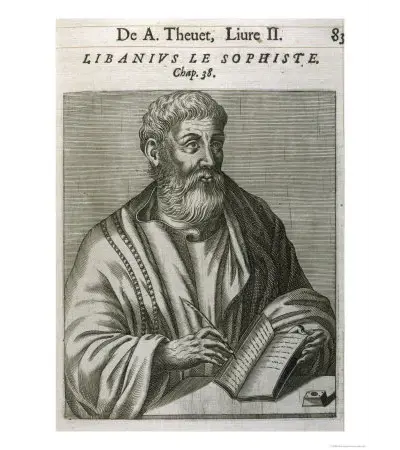
Libanius (Greek: Λιβάνιος, Libanios; c. 314 – 392 or 393) was a Greco-Syrian teacher of rhetoric of the Sophist school. During the rise of Christian hegemony in the later Roman Empire, he remained unconverted and in religious matters was a pagan Hellene.
