Robert Kennedy Quotes
The fact that free men persist in the search for the truth is the essential difference between Communism and Democracy.
Kennedy, Robert F. Just Friends and Brave Enemies. Harper & Row, 1962.


This statement later became known as “The Truman Doctrine.”

This quotation is very interesting in that many of Mrs. Roosevelt’s detractors constantly accused her of being a communist. They obviously had not read this column of any of the many where she shows antipathy to Communism.


In his early political career he talked and acted like a democrat forcing the military out of politics which they had been active in. He obtained the support of the democrats in Turkey and the Western Democratic governments. However as he amassed power he weakened or eliminated most of the4 democartic aspects of Turkish society. He eradicated the independence of the judiciary, gained control over the schools and the universities,, adopted many Islamic aspects of government eradicating the secular government which was the cornerstone of the Attaturk bloodless revolution, prohibited demonstrations against the government and jailed over 150 journalists and forcing many others to flee thereby controlling the press and other information sources. Ironically, despite his one-man autocratic rule, about half the population, many of whom had supported him when he pretended to be a democrat, opposed him causing him to become even more autocratic.


There were many in England and America who thought that political parties or “factions” as the Americans called them were inimical to republican government. Smyth disagreed and thought parties necessary for freedom and democracy. Turkey at the time was an Islamic Empire that while in decline still controlled large parts of Europe and most of North Africa. However, the Sultan had absolute control over both “church and state”. He was like the Pope and the Holy Roman Emperor in one person, There was no freedom of thought or speech.


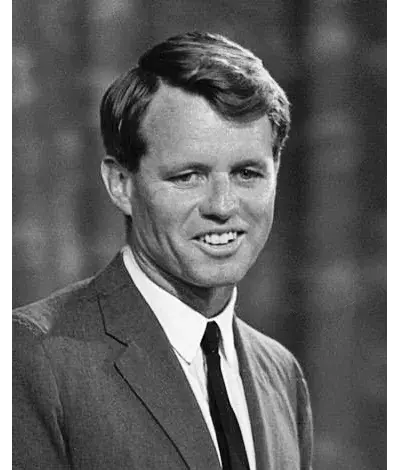
Robert Francis Kennedy, also referred to by his initials RFK or by the nickname Bobby, was an American politician and lawyer who served as the 64th United States Attorney General from January 1961 to September 1964, and as a U.S. Senator from New York from January 1965 until his assassination in June 1968. He was, like his brothers John and Edward, a prominent member of the Democratic Party and has come to be viewed by some historians as an icon of modern American liberalism.
