Friedrich Nietzsche Quotes
The dyed-in-the-wool teacher takes everything seriously only with respect to his students--himself included.
Nietzsche, Friedrich. Beyond Good and Evil. Translated by R.J. Hollingdale, Penguin Books, 1990, p. 95.


The Saudi Arabian Royal Family had been large financial and political supporters of the Wahabbi sect of Sunni Islam. The mullahs in turn supported the monarchy and provided religious cover, so important in Islamic countries. However, the Wahhabis took the Saudi money and set up Madrassas (Islamic Schools) throughout the kingdom and in many other countries of the world including the United States. However, the Wahhabi curriculum included extensive hateful and violence advocating materials regarding non-Muslims. After 9-11, the Royal Family realized that they were also the targets of the terrorists who ironically were recruiting many of their fighters and suicide bombers from the very Wahhabi Madrassas that the Saudis had funded. They claim that they were not previously aware of the extent of the violence taught in the Madrassas (hard to believe) but they resolved to make changes. As a first step, the examined all the texts and teaching guides of the institutions they had funded and demanded that changes be made. (However, they had little influence on those Madrassas outside the kingdom that were not dependent on current Saudi money such as many of the schools in Pakistan and The West Bank and Gaza. These did not change and continued to produce terrorists.). al-Faisal however showed that the Saudi’s were now serious about reform of the teaching by going a large step further, and focusing on the teachers. Saudi Arabia began a program to vet all the teachers, imams and other clerics, a step that was a remarkable reversal from the situation on 9-11.


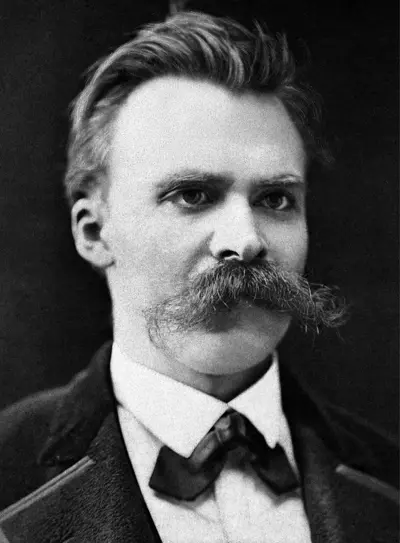
Friedrich Wilhelm Nietzsche was a German philosopher, cultural critic, composer, poet, writer, and philologist whose work has exerted a profound influence on modern intellectual history. He began his career as a classical philologist before turning to philosophy. He became the youngest person ever to hold the Chair of Classical Philology at the University of Basel in 1869 at the age of 24. Nietzsche resigned in 1879 due to health problems that plagued him most of his life; he completed much of his core writing in the following decade. In 1889, at age 44, he suffered a collapse and afterward a complete loss of his mental faculties. He lived his remaining years in the care of his mother until her death in 1897 and then with his sister Elisabeth Förster-Nietzsche. Nietzsche died in 1900.
