Otto Rank Quotes
The correct didactic analysis is one that does not in the least differ from the curative treatment. How, indeed, shall the future analyst learn the technique if he does not experience it just exactly as he is to apply it later?
Ferenczi, Sándor, and Otto Rank. The Development of Psychoanalysis. Translated by Caroline Newton, Nervous and Mental Disease Publishing Company, 1925, p. 53.


As absurd as it seems to us today, traders were not very high in the English social order. Business itself was not well respected. English governing councils were devoid of anyone who had trade of business experience. Holland, in contrast, perhaps went to the other extreme in that traders and business men dominated to political structure. The Dutch were much more successful in foreign trade relatively than the English.

There has been good data supporting Weld’s view throughout the 20th century when there is a booming economy and a labor shortage. But in times of recession and depression, there were few jobs and so policies build on this principle tended to break down. There is also in the 21st century, a changing economy where there are few jobs available for which generalized work experience is sufficient preparation for most employers.


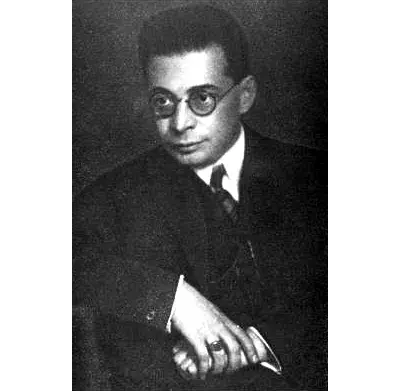
Otto Rank was an Austrian psychoanalyst, writer, and teacher. Born in Vienna, he was one of Sigmund Freud's closest colleagues for 20 years, a prolific writer on psychoanalytic themes, editor of the two leading analytic journals of the era, managing director of Freud's publishing house, and a creative theorist and therapist. In 1926, Rank left Vienna for Paris and, for the remainder of his life, led a successful career as a lecturer, writer, and therapist in France and the United States.
