Clarence Miller Quotes
The Congress of the United States says to the people of Puerto Rico, once and for all, that they are a part of the United States domain and will always remain there; that the legislation for independence in Puerto Rico must come to a decided and permanent end.
Clarence Miller, *, U. S. Congressman (*, MN), House Debate, May 5, 1916
Sourced by: Eigen's Political and Historical Quotations


Given the time, Mill’s view on the colonies were appreciated by few Englishmen, but turned out to be exactly predict the British reality a century later.

His prediction was correct. However, most of the direct force for withdrawal came from the people of America and not the Vietnamese.

He was an Army Major at the time he wrote this article. In 1966 his positive view of Britain was overwhelmed by the anti-colonial fervor that existed in much of Africa.


In 1937 the U. S. Treasury Department commissioned a pair of large murals to decorate the lobby or the Ariel Rios Federal Building in Washington DC. On the mural was depicted a U. S. Mail Service from Alaska to Puerto Rico. It showed four Puerto Rican women reading a letter in the Inuit dialect presumably delivered from Alaska. The authorities loved the mural until they discovered the translation of the Inuit letter. This was a direct reference to the Puerto Rican Nationalist Independence Movement. That year 18 Puerto Rican Nationalists were killed and over 100 wounded when police fired into a crowd of demonstrators on March 21. Kent, a famous artist, planted a newspaper story with the translation and soon media all over the company were drawing attention to the Puerto Rican movement, just as Kent had intended.

Mobutu with Amerucan CIA and French assistance deposed Lumumba, murdered him, and seized power.


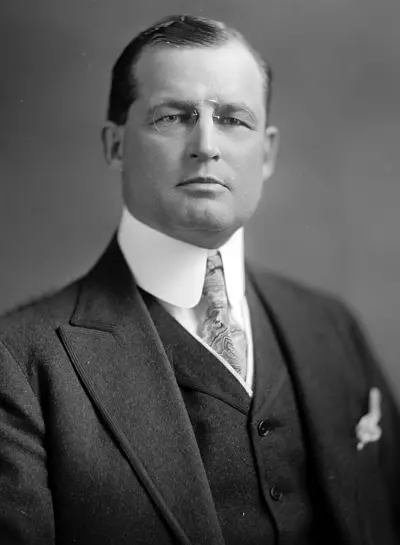
Clarence Benjamin Miller was a U.S. Representative from Minnesota. He was born in Pine Island, Minnesota and attended the country school, high school, and the Minneapolis Academy; was graduated from the academic department of the University of Minnesota at Minneapolis in 1895 and from the law department of the same institution in 1900; superintendent of the public schools of Rushford, Minnesota, 1895 – 1898; was admitted to the bar in 1900 and commenced the practice of law in Duluth; member of the State House of Representatives in 1907; elected as a Republican to the 61st, 62nd, 63rd, 64th, and 65th congresses, (March 4, 1909 – March 3, 1919); unsuccessful candidate for reelection in 1918; member of the congressional investigating committee to the Philippine Islands in 1915; special investigator for the War Department to the western front in France in 1917; elected assistant secretary of the Republican National Committee in 1919 and was chosen its secretary in 1920; engaged in the practice of law in Washington, D.C.; died in Saint Paul, Minnesota; interment in Pine Island Cemetery, Pine Island.
