Jules Renard Quotes
The bourgeois are other people.
Renard, Jules. The Journal of Jules Renard. Translated by Louise Bogan and Elizabeth Roget, George Braziller, 1964.


… an army of Gatsbys wanting not to overturn the social order but only to belong to the upper crust.
Many in India viewed them as radicals because they were demanding so much change and reform. However, Deb’s view was they only wanted sufficient change to allow them to move into the higher strata of India.


Describing the annual conference in Davos, Switzerland where the very wealthy of the world gather and discuss mutual concerns.


See {633219} and {633221}.


This famous charity political dinner is annually attended by the very wealthy. While the Republican party at this time had the wealthy as one of its constituents, it had been considered politically tactful not to make public statements about the party and the wealthy. Bush was not very tactful and the quotation was widely circulated to middle class and poor citizens who resented Bush’s point of view and his wording using “haves” and “have-mores” Others appreciated the humor.


This was the prevailing view in Europe at the time; it was less so in the United States, where there were so many people who owned their own land and farmed it or developed manufacturing facilities and hence were the mind AND the limbs of the enterprises. However, the upper classes tended to agree with the European view. The difference between the American and European views was one of class mobility. In America “limbs” who demonstrated capacities of “mind” were much more able to advance in America. However, even into the 21st century here was a general feeling of the upper class that the “minds” made the critical and impactful decisions. This is one of the reasons that executive and CEO pay advanced so rapidly when compared with workers (the “linbs”).
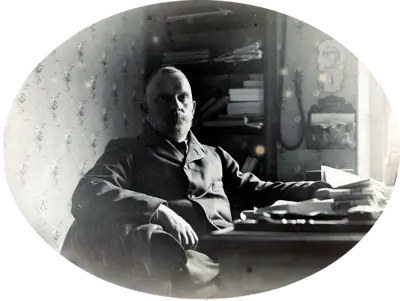
Pierre-Jules Renard was a French author and member of the Académie Goncourt, most famous for the works Poil de carotte (Carrot Top, 1894) and Les Histoires Naturelles (Nature Stories, 1896). Among his other works are Le Plaisir de rompre (The Pleasure of Breaking, 1898) and the posthumously published Huit Jours à la campagne (A Week in the Country, 1912).
