Margaret Chase Smith Quotes
The American people are sick and tired of being afraid to speak their minds lest they be politically smeared as "Communists" or "Fascists" by their opponents. Freedom of speech is not what it used to be in America. It has been so abused by some that it is not exercised by others.
Margaret Chase Smith, U. S. Congressman & U. S. Senator (Republican, ME), Declaration of Conscience, 1972
Sourced by: Eigen's Political and Historical Quotations


In September of 2005 a Danish Newspaper published some political cartoons showing the hypocrisy of some Muslims who use Islam to justify murder of innocents and terrorism. Months later, many in the Middle East protested vehemently and Muslim riots broke out because the Prophet Muhammad's visage was depicted against Islamic tradition. Many Muslim leaders claimed that insulting religion was an “abuse” of freedom of speech including those from nations which regularly publish material that is virulent against Christians and Jews.


He had just come from Russia and the Queen Mother had asked him why he was not more talkative.


The important thing about rights is that they exist independent of majority opinion. The majority might want to trample the rights of an unpopular group or individual. Very often Islamic modernists like Serageldin are many among the educated Muslims but the majority views are often drowned out by the violence and extremist statements of the fundamentalists.
Islamic modernists like Serageldin are many among the educated Muslims but their views are often drowned out by the violence and extremist statements of the fundamentalists. This quotation is similar to statements by American Supreme Court Justices but surprises us when coming from a Muslim. But there are many who are as much committed to freedom of speech as most Americans. Even in America, some politicians have tried to make incitement a crime. John Adams’ Alien & Sedition Acts and laws of WWi are examples. However, in no Islamic nation have reformers had incitement removed as a crime as of 2011.


The Red Scare had affected much of the country. The House Un-American Activities Committee had frightened much of the country claiming that the Communists had infiltrated the government. But when facts and proof were demanded, all they came up with some workers in the Hollywood film industry who had gone to communist meetings and some who had joined the party before the War when The Great Depression was still plaguing the country. The Hollywood and TV executives caved in to the political demagogues and fired and blacklisted not only the communists but those who refused to testify. The actors and musicians could not work for several years until the country came to its senses, but the screenwriters wrote under false names. At least one Academy award was won that way.


This was a description of the post WWII censorship in East Germany under the communists, but it applies to most political censorship in any country. The same dynamics functioned in the United States during both World Wars and during the red scare of McCarthyism.


By restricting or limiting the campaign contributions of corporations, Scalia observed, the government is in effect is muffing the voices of the entities which not only is a great source of information on the economy, but it represents and is a very large component of the American economy itself. The Citizen United case resolved that issue to obtain the views and information of the corporations, but in the views of many others the price society pays is very high—perhaps too high.


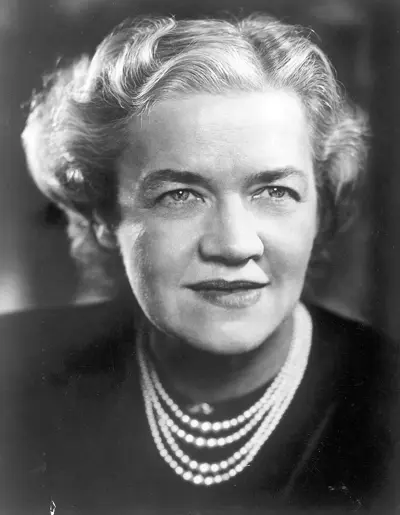
Margaret Madeline Chase Smith was an American politician. A member of the Republican Party, she served as a U.S Representative (1940–49) and a U.S. Senator (1949–73) from Maine. She was the first woman to serve in both houses of the United States Congress, and the first woman to represent Maine in either. A moderate Republican, she was among the first to criticize the tactics of Joseph McCarthy in her 1950 speech, "Declaration of Conscience". Smith was an unsuccessful candidate for the Republican nomination in the 1964 presidential election, but was the first woman to be placed in nomination for the presidency at a major party's convention.
