Amy Chua Quotes
That's what we were doing for the last twenty years, telling everybody to adopt a raw capitalism with no safety nets, no redistributive mechanisms…. I think we have to find ways to spread the benefits of global markets beyond just the small group of market-dominant minorities and foreign investors. We need to find ways to redistribute the wealth, whether it's property title and giving poor people property, land reform.... Redistributive mechanisms are tough to have if you have so much corruption.
Amy Chua, Attorney & Ethnographic Economist, Harry Kreisler, Conversations with History, January 22, 2004
Sourced by: Eigen's Political and Historical Quotations


The founder was Charles E. Coughlin, 1891-1979, a demagogic Catholic Priest who drafted the principles and invited others to join him. Hundreds of thousands did in this organization which began in idealism, and ended in scandal and hate mongering, so much so that Father Coughlin was ordered off the radio and out of politics by the Catholic Church. The National Union in 1936 had morphed into the Union Party which ran Presidential candidates in the 1936 election.


In 1877 Wasburn was dropped from the List of Ministers by the Unitarian Church. He had become quite atheistic.


The “rebate agony” referred to a corrupt practice of the Railroads and the Large Monopolies. The railroads charged a very high rate for the transportation of important products like beef and oil. However, secretly they gave back a large percentage of the transportation rate charged to the trusts. They in turn could cut their prices and undersell all the smaller competitors who were paying “full freight” and could not afford to match the lower price. As soon as the smaller competitors were driven out of business in an area, the trust raised its rates even higher than they charged originally. The Railroad had made a small but reasonable profit on the freight of the trusts but they were guaranteed all their business. They also made huge profits on the higher rates that the small companies paid until those companies were driven out of business. Journalists like Ray Baker and Ida Tarbell had uncovered the rebate scheme which enabled the trusts to steal high amounts from the general public through unreasonably high prices. President Theodore Roosevelt was committed to try and regulate the railroads and not allow rebates but charge the same public rate to all with no rebates. Socialists like Sinclair, thought that this attempt would be hopeless—that the damage had already been done, and the trusts now had so much money that they could buy state legislatures and many in Congress to preserve their dominance.
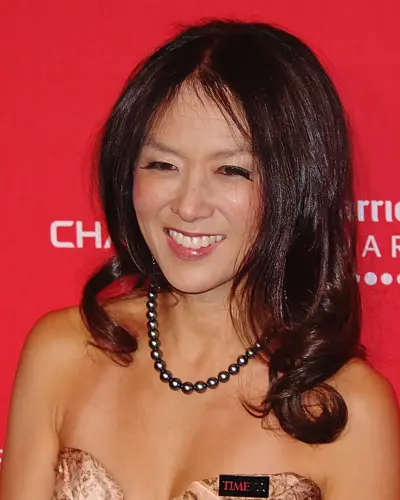
Amy Lynn Chua is an American law professor and writer. She is the John M. Duff Jr. Professor of Law at Yale Law School. Her expertise is in international business transactions, law and development, ethnic conflict, and globalization and the law. She joined the Yale faculty in 2001 after teaching at Duke Law School for seven years. Prior to starting her teaching career, she was a corporate law associate at Cleary, Gottlieb, Steen & Hamilton. She is also known for her parenting memoir Battle Hymn of the Tiger Mother. In 2011, she was named one of Time magazine's 100 most influential people, one of The Atlantic’s Brave Thinkers, and one of Foreign Policy’s Global Thinkers.
