William Blake Quotes
That the Jews assumed a right exclusively to the benefits of God will be a lasting witness against them and the same will it be against Christians.
Blake, William. Annotations to Richard Watson's An Apology for the Bible. 1798.


Ethnic cleansing was a basic component of early Islam. The contemporary seeming hysteria over American troops in Arab nations, has in addition to the usual problems of soldiers from another land this background. The same is true about the presence of Israel. From some points of view, the presence of Christians and Jew in the Middle East is wrong per se because it undermines the work and intention of the Prophet.


This sura has unfortunately been used by some Serbians and other Christians to justify ethnic cleansing against Muslims.


It is amazing what explanations religious and biased fanatics can come up with to explain history.


In this quotation the founder of Protestantism criticizes other Christians for their anti-Semitism. Luther later became a virulent anti-Semite himself. See {629230}
Toleration is a relative term. The Muslim Moors made Christians (and Jews) pay a special tax. At times they were forced to wear special clothing so that they could be readily identified. And they could not build churches larger or taller than the smallest mosque in the community. At times, their occupations were restricted but at other times Christians and Jews were appointed to the highest positions like Vizier. The Inquisition, in contrast, forced all Muslims (and Jews) to leave the country without any of their property or money or be tortured and killed—usually by burning at the stake unless of course that they converted to Christianity.

Lopez and Elizer were Jews who had escaped the persecution in Portugal to come to America. They and other non-Christians could live and work in Rhode Island but could not vote or hold public office by a previous decision of the Rhode Island Assembly. See {619707}.The Jews had petitioned for their civil rights.

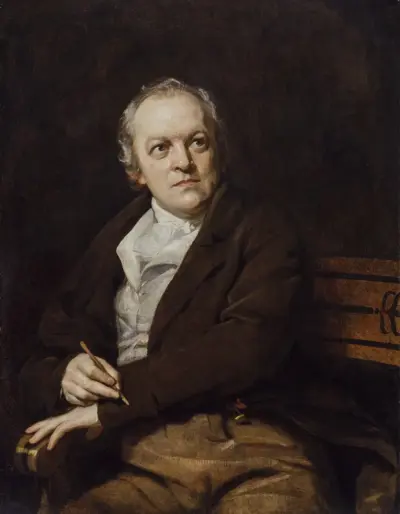
William Blake was an English poet, painter, and printmaker. Largely unrecognised during his lifetime, Blake is now considered a seminal figure in the history of the poetry and visual arts of the Romantic Age. What he called his prophetic works were said by 20th-century critic Northrop Frye to form "what is in proportion to its merits the least read body of poetry in the English language". His visual artistry led 21st-century critic Jonathan Jones to proclaim him "far and away the greatest artist Britain has ever produced". In 2002, Blake was placed at number 38 in the BBC's poll of the 100 Greatest Britons. While he lived in London his entire life, except for three years spent in Felpham, he produced a diverse and symbolically rich œuvre, which embraced the imagination as "the body of God" or "human existence itself".
