Will Durant Quotes
"Spinoza did not seek to found a sect, and he founded none"; yet all philosophy after him is permeated with his thought.
The first clause of the quotation was itself a quotation that was originated by the eminent British Jurist, Historian and academic--Sir Frederick Pollock. Spinoza has been as influential on intellectuals and their works as any other and is up there with Aristotle and Plato, However, while through his influence, the average person is familiar with many of his ideas, his writing is so abstract that few people can understand it with out a great intellectual effort. Baruch Spinoza has influenced thought on many areas but science, in particular, has benefited from his analyses and ideas. See Einstein's Quotation 644230.
Will Durant, Life and Philosophy of Spinoza, 1899
Sourced by: Eigen's Political and Historical Quotations

Einstein wrote this famous poem in honor of Baruch Spinioza, the 16th Century Dutch Philosopher who has had the most influence on modern scientific thinking. Einstein was not only influenced scientifically, but as a religious man his personal theology was most influenced by Spinioza. See related quotes.


The original was in German. Spinoza was a Dutch Philosopher who originated this abstract notion of a universal God. This was one of the reasons fro his excommunication. Spinoza’s ideas were considered so radical and dangerous that he was the only man in history who was excommunicated by the Catholics, the Jews and the Muslims.


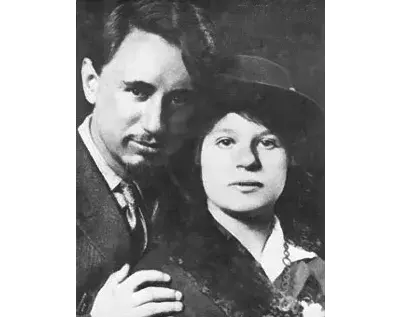
- Born: November 5, 1885
- Died: November 7, 1981
- Nationality: Russian, American
- Profession: Historian, Writer, Philosopher, Teacher
William James Durant was a Russian born, historian, and philosopher. He became best known for his work “The Story of Civilization,” and acclaimed 11 volume series written over 50 years in collaboration with his wife, Ariel Durant, and published between 1935 and 1975. He was earlier noted for The Story of Philosophy (1926), described as "a groundbreaking work that helped to popularize philosophy". They were awarded the Pulitzer Prize for General Non-Fiction in 1968 and in 1977, the Durants were presented with the Presidential Medal of Freedom.
