Zhuangzi Quotes
Sorrow and happiness are the heresies of virtue; joy and anger lead astray from TAO; love and hate cause loss of virtue. The heart unconscious of sorrow and happiness - that is perfect virtue. One, without change - that is perfect repose. Without any obstruction - that is the perfection of the unconditioned. Holding no relations with the external world, - that is perfection of the negative state. Without blemish of any kind, - that is the perfection of purity.
Giles, Herbert A. Chuang Tzu: Mystic, Moralist, and Social Reformer. Bernard Quaritch, 1889, p. 191.


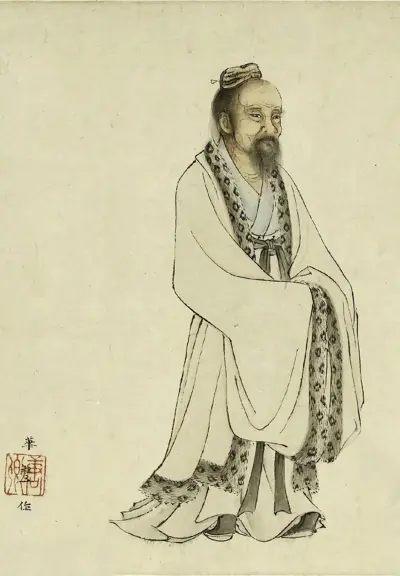
Zhuang Zhou, commonly known as Zhuangzi (also rendered as Chuang Tzu), was an influential Chinese philosopher who lived around the 4th century BC during the Warring States period, a period corresponding to the summit of Chinese philosophy, the Hundred Schools of Thought. He is credited with writing—in part or in whole—a work known by his name, the Zhuangzi, which is one of the foundational texts of Taoism.
