Garnet Joseph Wolseley Quotes
So long as the sun shines, the Transvaal will remain British territory.
Garnet Joseph Wolseley, 1833-1913, British Field Marshall & Commander in Chief, British High Commissioner of South Africa, December 1879
Sourced by: Eigen's Political and Historical Quotations


When the British first colonized South Africa, the area they used was not inhabited or very sparcely so. However, some Black tribes (including the Zulus) were moving from the north and themselves were colonizing or annexing the sparcely populated areas to their kingdom. The British were most interested in Trading so did not have large land asperations. The Dutch white Boer Africanners, in contrast, wanted to farm the lands and use the range for their cattle. They wanted the land. The English policy was that there would be friendly relations with the Black tribes surrounding their Cape Colony and no one should take their land. However the Boers started attacking the Black areas and seizing their farms and villages. At first, the English assumed that the Blacks would easily be able to ward off the invasion as the Afrikanners had no professional troops like the British. However, the neighboring native tribes were not very warlike or good fighters. They were being overrun by the Zulus coming from the North and the Boers from the South. The British Government had a real problem in that they would have to have British soldiers fight the white Afrikanners if they wanted to stop the illegal white invasions. This was the root of the Boer War where the British would be fully at war with the Africanners.


The Chief Secretary, Lord Castleregh, had put forward a resolution to bring about the unification of Great Britain and Ireland under the single British Parliament at Westminster. He and his allies had bribed a number of the Irish MPs to support the union. With Union some Irish MPs would then be able to win seats representing Ireland in the British Parliament. Although Grattan and most of the Orangemen opposed the Union, 4 months later, the bill passed comfortably. Ironically, Grattan was one of the Irish MPs whose popularity won a seat in the unified British Parliament.


General Otis, the commander of American troops in the Philippines regarded this proclamation as tantamount to a declaration of war and prepared his forces for such.

In 1942 it was clear that India would be given its independence soon. There were a number of sticky problems in doing so. One was the fact that when the British came to India, all the states were ruled by Maharajas (Princes, Kings, etc.). The British signed treaties with almost all of them guaranteeing to protect and preserve their local powers in exchange for acceding to British Rule of the national government. But when it came time for independence, democracy was the mode—even in England. The Maharajas insisted that the British leave them with their control of their states as they had agreed, as opposed to creating democratic government at the state level. In the final analysis, the Maharajas lost all their governmental functions and privileges but were able to retain much of their wealth.
Browne, an Englishman by birth, was the instrument of the Protestant Reformation in Ireland.

Paine was describing the conquest of England in 1066 by William the Conqueror.

Shortly after the failed uprising the Mufti went to Berlin where he was made a Nazi SS Major General and set up Arab SS Units to exterminate the Jews in the Middle East. See {586894}.

The British saw the American colonies and the East Coast Canadian provinces all as their North American possessions. With the growing dissatisfaction of the New England and other Colonies, the British wanted to secure Quebec as a safe base where there were few rebels. Fox, of the opposition, criticized the heavy-handed control of Quebec wanting to give the rights of Englishmen under the English Constitution to all citizens of the North American colonies. Had Britain done so, there may never have been an American Revolution.


He was Governor-General of Korea when he made this statement. Most Japanese had nothing but disdain for Koreans and most other ethnicities.


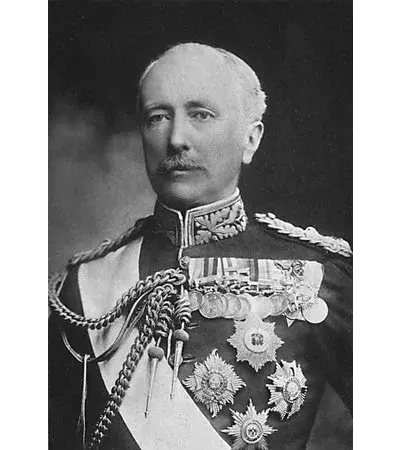
Field Marshal Garnet Joseph Wolseley, 1st Viscount Wolseley, KP, GCB, OM, GCMG, VD, PC was an Anglo-Irish officer in the British Army. He became one of the most influential and admired British generals after a series of successes in Canada, West Africa, and Egypt, followed by a central role in modernizing the British Army in promoting efficiency. He served in Burma, the Crimean War, the Indian Mutiny, China, Canada and widely throughout Africa—including his Ashanti campaign (1873–1874) and the Nile Expedition against Mahdist Sudan in 1884–85. Wolseley served as Commander-in-Chief of the Forces from 1895 to 1900. His reputation for efficiency led to the late 19th century English phrase "everything's all Sir Garnet", meaning, "All is in order."
