Aleksander Kwasniewski Quotes
So I think that is one of the reasons we can face some regional problems, which are very difficult, very dramatic and is necessary to have instruments to solve these problems. NATO is such instrument.
Kwaśniewski, Aleksander. "Interview with Aleksander Kwasniewski." CNN Q&A, interviewed by Jim Clancy, CNN, 17 July 2002.


This is one of he earliest uses of the term “policemen of the world.”


The reality of course was that NATO was created primarily to prevent Russia from dominating Europe. Baker could not officially state that. There are many experts who believe that if Russia had been allowed to join NATO after the breakup of the Soviet Union, relations with Russia may have been better. However, the NATO charter gives each member nation a veto over activities and there was little trust in Russia by most of the NATO members.


This was a very important statement for the President to make. At the time there was a very conservative right wing that was advocating withdrawing from the UN or at the very least not paying such a large share of the UN funds for operation.
One major problem at the time was that the Soviet Union was supporting and instigating revolutions in many parts of the world. When most nations of the UN wanted to provide peace keeping troops to quell the conflict, the Russians would veto and block the effort, Vandenberg wanted the UN to change the rules regarding the veto. The original right of veto for the major nations was originally included at the insistence of the United States and many Americans did not want to give it up or have any exceptions lest there be more. The Russians at that time also did not want to give up any of their veto powers. Another method that Vandenberg wanted to solve the Russian peacekeeping blockage problem was for America to engage in more collective security pacts so that action could be taken without UN Security Council unanimity by going around the UN.


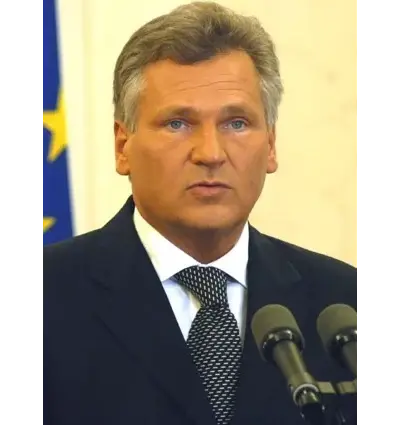
Aleksander Kwaśniewski is a Polish politician and journalist. He served as the President of Poland from 1995 to 2005. He was born in Białogard, and during the communist rule, he was active in the Socialist Union of Polish Students and was the Minister for Sport in the Communist government during the 1980s. After the fall of Communism, he became a leader of the left-wing Social Democracy of the Republic of Poland, a successor to the former ruling Polish United Workers' Party, and a co-founder of the Democratic Left Alliance.
