Jose de San Martin Quotes
Seek six or eight generals in France (who nowadays haven’t even got anything to eat), bring them here, and you would see how all operations and events would change. Let us recognize our ignorance and let us not allow our pride to push us into the abyss
Jose de San Martin 1778-1850, President of Peru, Statement to associates concerning the training of soldiers Quoted in Robert Harvey, Liberators
Sourced by: Eigen's Political and Historical Quotations


From the beginning, the issue of whether the country should have a standing army or depend on the militia and the citizen soldier has been controversial. There is a , romantic American myth about the Militiamen in Colonial and Revolutionary America—the citizen soldiers who would leave their farms and rise to the military necessity of the day. However, not only were the militia very hard to muster to duty, but most actually didn’t own or have experience with firearms, and the prevailing opinion of knowledgeable military leaders from George Washington on down was that the militia were not very good soldiers. See {613015}, {613016}, {613022}, {613027}, {621987}, {621988}, {613030}, {613033}, & {613056}

See {615887} for one of the general’s statements illustrating his hubris.

At this point, Stearns had already organized and trained 3,000 Black Troops from the South. He was a strong advocate of recruiting and enlisting as many slaves as they could. Ironically, the desire to serve in the Army with a weapon, was symbolically a powerful symbol of equality and manliness that it was effective with Northern free Blacks and Southern escaped slaves. Another interesting thing was that Stearns insisted that the ex-slaves not only made better soldiers than the Confederates but that they were better than most Union White troops. That view was not promulgated very publically.


We are so accustomed to thinking about George Washington as a great military leader that it is surprising to see contemporary comparisons where Washington was found wanting or second. Actually Horatio Gates was a brilliant tactical general and a great leader of men—many think far better than Washington, but the genius of Washington was his strategic and political grasp of the situation. Essentially, with exceptions like the Battle of Trenton, Washington lost almost all the battles he fought as a tactical general. He realized early on that he did not have to win battles; he just had to prevent losing them so badly that he could not continue the fight. The insurgent wins as long as he can still fight. The British could not win unless they eliminated the ability of the revolutionists to fight. But Washington won the last battle at Yorktown, and that is the one that counted. Rush ran the hospitals for the Revolutionary Army and talked to many officers and enlisted men, and also observed much of the British military practices.


While running for office he was trying to win the support of Republcian Conservatives who were very unhappyt with their percieved lack of progress in fighting ISIS. However, this was insulting to many military people--especiually since ISIS was being deprived of they sources of funding and oil trade, their leaders were being killed at a rapid rate, and they were losign most of their territory. After he won the Presidency, on the very night of his inaguration he then flip flopped and paraised the general leadship of the military. While most politicans had a certain degree of hypocricy, Trump could make totally contrdictory statements without any embarassment. See Quote 644331..


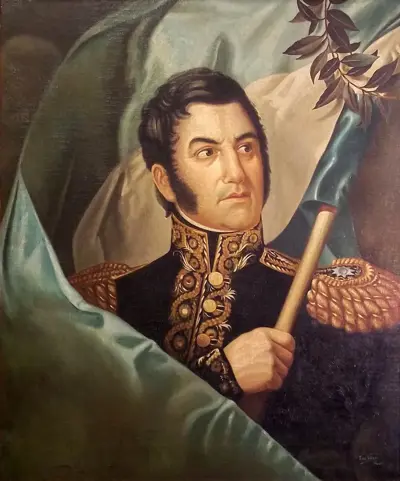
José Francisco de San Martín y Matorras, known simply as José de San Martín (Spanish pronunciation: [xoˈse ðe san maɾˈtin] (listen)) or El Libertador of Argentina, Chile and Peru, was an Argentine general and the prime leader of the southern and central parts of South America's successful struggle for independence from the Spanish Empire who served as the Protector of Peru. Born in Yapeyú, Corrientes, in modern-day Argentina, he left the Viceroyalty of the Río de la Plata at the early age of seven to study in Málaga, Spain.
