Achim Steiner Quotes
Restoration of peatlands is a low hanging fruit, and among the most cost-effective options for mitigating climate change.
Peat bogs that have been abused emit large amounts of greenhouse gasses which contribute to global warming. It is relatively easy to restore peat bogs and the effect is significant in reducing greenhouse gases. Therefore he argues that it is a sensible early step to take to cope with climate change.
Achim Steiner, German expert in environmental politics, UN Under-Secretary General & Executive Director UN Environment Programme, IUCN UK Commission of Inquiry on Peatlands, Full Report, IUCN UK Peatland Programme, October 2011
Sourced by: Eigen's Political and Historical Quotations


Less than an average of 5 feet above sea level, Maldives is the lowest country in the world. It’s highest point is less than 8 feet high. The small increase in the world sea level resulting from climate change has already affected Maldives, and an increase of only a foot would wipe out a large part of the country.


Duke of Edinburgh. He had recently been informed that his son and his wife were expecting a child.

It was Bruckner who first started serious discussion about human behavior affecting the climate of the earth. So the polarizing political issue really began in 1890.


Paulson, Michael Bloomberg and other politicians who had vast business experience were beginning a campaign to show the great danger to the economy of climate change and global warming.


He had been a vigerous global warming skeptic for some theoretical reasons having to do with how the theormometers measured temperature. He and his daughter put together a project to examine most of the data and make what he thought was a proper analysis. A significant part of his funding came from the ultra-conservative billionaire, Charles Koch who also funded the anti-global warming Heartland Institute. However, after Muller and his daughter finished their analysis, he surprised most and angered Koch, with this statement. The data had changed his mind.

This was his last House debate and whereas almost all scientists had agreed that climate change was a serious challenge to the nation, an ideologically driven majority of his Republican Party denied that that there was any climate change that was different from the usual vicissitudes of nature, he tried to persuade his anti-scientific, conservative colleagues to face reality.


The Paris Agreement was an agreement within the United Nations Framework Convention on Climate Change (UNFCCC) dealing with greenhouse gases emissions mitigation, adaptation and finance starting in the year 2020. The language of the agreement was negotiated by representatives of 195 countries at the 21st Conference of the Parties of the UNFCCC in Paris and adopted by consensus on December 12, 2015. Never before in the history of the world had that many nations agreed on anything. Yet the United States Donald Trump administration, and a significant proportion of right wing and Tea Party Repoblicans actually believed that the threat of climate change was a hoax and at best the erroneous conclusion of "left wing" scientists. Within the wcientific community in the United State, there were very few major scientific issues for which there was almost unanamous consensus. Climat change and the role of humans in accelerating it was one of those.

Many Republicans were in denial about climate change claiming that all the scientists were wrong about the facts of global warming and the danger to man that it posed. Beauprez, however, had an almost unique position among candidates. He agreed that climate change was a great danger, however, he thought the concern of most Democrats and some liberal Republicans was unnecessary hysteria because God will save the Earth—His creation.
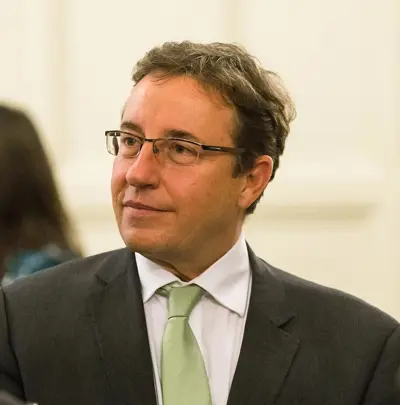
Achim Steiner is an environmentalist, of Brazilian-German ancestry, who currently serves as the Administrator of the United Nations Development Programme. Before joining UNDP, he was Executive Director of the United Nations Environment Programme UNEP (2006–2016), and director of the Oxford Martin School (2016–2017). He has also served as Director General of the International Union for Conservation of Nature (IUCN) and Secretary-General of the World Commission on Dams.
