Luis Fortuno Quotes
Republicans cannot continue to oppose every Hispanic issue.
Fortuño, Luis. Interview on GOP Hispanic Outreach. Politico, Capitol News Company, 15 Nov. 2012.


Not all segments of the Republican Party perceived that they needed immigration reform. Some greatly feared more non-whites coming into the country and ending the traditional majority of whites. After the 1964 Civil Rights Bill was passed, almost all the racist Democrats of the “solid South” switched to the Republican Party and the last thing they want is to allow the 11 million mostly Hispanic and/or Black undocumented immigrants to become citizens and vote.

Dana Ruth Schwartz. The Republicans who had control of the House of Representatives were reaching the end of the fiscal year and had not yet passed a budget so the government would have to shut down in a few days. They had a very strong position if they wanted to blackmail the Democratically controlled Senate and the Democratic President. The majority of the Republicans decided that they wanted to use the Blackmail tactic, so they passed a budget that they knew the Senate and the President would reject and then the Republicans could hold out for their ransom demands. However, when the Republicans met to decide on what they should demand they neither could agree in what or the timing of their tactics. They had launched a major attack without having a clear objective, an exit strategy or even an alternate if they did not succeed.

This quotation is very surprising to most people who are not familiar with the history of the struggle regarding abortion in America. In the early days of the family planning movement and when abortion rights were first advocated in America, the proponents were almost all Republicans. At the time, the Republican Party consisted of economic conservatives and social liberals—“Rockefeller Republicans they would later be called. At the same time the Democratic Party was aligned very differently. The Southern Conservatives and fundamentalist Protestants of the Bible Belt were all Democrats. Most Roman Catholics were Democrats. Intellectuals at the time tended to side with the Democrats on economic issues and with the Republicans on social issues. In the 1960s the Republicans went after the racist resentment in the South over the Civil Rights Act of 1964. The Southern Democrats of the Solid South switched to the Republican Party, and many liberal republicans, reacting to their party now being the party of the the anti equality racists, became Republicans. The Southern Democrats then pushed out the moderate Republicans who were the social liberals.

The Republicans had been very effective in staffing off all attempts to strengthen gun control legislation. In addition, in a number of states they passed legislation reducing the voting days, times and places and requiring driver’s licenses or equivalent picture ID at the time of registration voting. Election day, not being a work holiday in America, it is harder for less affluent people to arrange their schedules and get to polling places, so restrictions tend to reduce their voting more so than for affluent citizens. The former tend not to vote for Republicans, so this was a very effective political strategy, albeit many questioned the morality, the fairness, the legality and the long term value to the nation.

The historian was comparing Obama to other historical presidents who either had a majority of both Houses of Congress or had an opposition party that was generally quite cooperative and willing to compromise for the sake of running the country smoothly. At this point in time there was a Tea Party wing of the Republican that was particularly negative and obstructionist. They tended to threaten and intimidate the main stream Republicans who used the filibuster to block legislation the majority of Senators had voted for more times than all the other Congresses in American history. And that was only in Obamas first 6 years.
There were some arch conservatives who saw pluralism and multiculturalism as a negative—something to be avoided. Some were white supremacists and others just felt that having a uniform national culture was better.


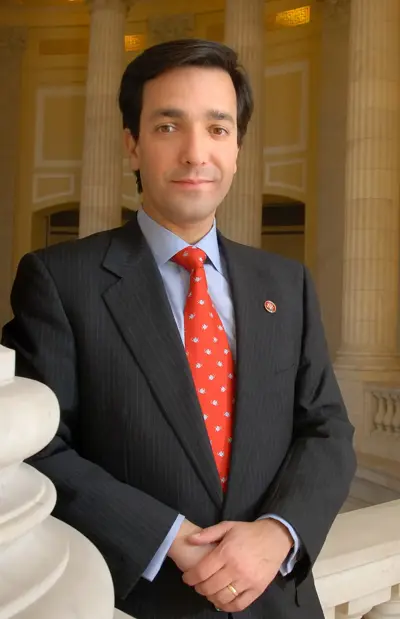
Luis Guillermo Fortuño Burset is a Puerto Rican politician who served as Governor of Puerto Rico, an unincorporated territory of the United States, from 2009 to 2013.
