Nayef Al-Rodhan Quotes
Realism implicated that imperialism and imperialist conquests or prestige can be pursued as part of the animus dominandi, the desire to dominate, which is the social force that determines political activity.
Al-Rodhan, Nayef R. F. Symbiotic Realism: A Theory of International Relations in an Instant and an Interdependent World. LIT Verlag, 2007.

After the economic & power collapse of the Soviet Union, the United States was the only remaining superpower. Givern Russia's diminshed capability and many Americans still carrying resentments about the Cold War, America's foreign policy and diplomacy did not treat Russia as if they were a very important power in the world. Puten greatly resented the fact that Russia was no longer considered or treated like a world power, Russia had a nuclear arsenal and a total delivery system what was in the same destructive potential class as the United States. There were many Russiabs who had similar resentments and Putin sert out to adopt policieis and practices that would force the United States and the other nations to consider them with more dignity, respect and consdideration. This was a typical statement of the period when he was "stoking the fires of Russian resentment.


1st Baron & 1st Marquis Curzon of Kedleston

Often called Blackshirts

This is the kind of threat that was used by Germany before the First World War. It worked with Turkey, but King Albert realized that being an “ally” of Germany meant losing independence anyway. Belgium would not join Germany, so the Germans invaded Belgium in 1914. Belgians fought with the allies and at the end of WWI, they were able to rebuild their independent state and thrive until they were again invaded by Germany in WWII. Turkey, in contrast, lost their entire empire, as a result of their fighting as German allies in WWI.


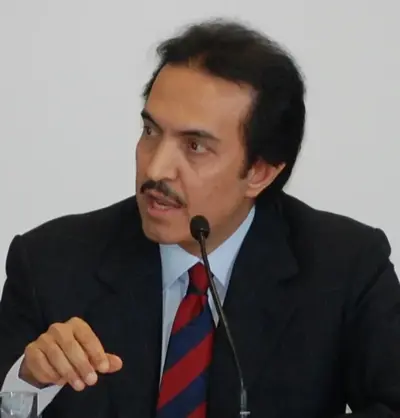
Nayef R. F. Al-Rodhan (Arabic: نايف الروضان; born 1959) is a Saudi philosopher, neuroscientist, geostrategist, and author. He is an honorary fellow of St. Antony’s College at Oxford University, Oxford, United Kingdom, and senior fellow and head of the Geneva Centre for Security Policy’s Geopolitics and Global Futures Programme, Switzerland, Senior Research Fellow, Institute of Philosophy, School of Advanced Study, University of London, United Kingdom, and Member of the Global Future Council on Frontier Risks at the World Economic Forum. His research focuses on the interplay between: Analytic Neurophilosophy, Geopolitics, Global Futures, Outer space security, Cultural discourse and synergies, Disruptive technologies, International Relations and Policy.
