Joseph Schumpeter Quotes
Rational as distinguished from vindictive regulation by public authority turns out to be an extremely delicate problem which not every government agency, particularly when in full cry against big business, can be trusted to solve.
Joseph A. Schumpeter, 1883–1950, Austrian Economist & Political Scientist, Capitalism, Socialism, and Democracy, 1942
Sourced by: Eigen's Political and Historical Quotations

During The Depression although business in general was doing very poorly, there were a few which had grown immensely powerful and abused the power as there was little or no regulation at the time.


He was referring to Fannie Mae, the government-created. private mortage guarantee company. It was heavily regulated, and in general it met the regulatory requirements. However, the requirements were insufficient, and in the 2008 Meltdown and the Great Recession that followed, Fannie Mae itself was in such bad financial condition, that the Federal Government had bail them out or have the entire home mortgage industry fall apart.

This was a very important quotation because Cox was a strong advocate of deregulation and voluntary regulation, and that is why he was appointed to head the SEC by George W. Bush. He was the leading Republican expert on Regulation of the Stock Markets and sale of public securities. However when the Meltdown of 2008 hit, it was clear to all but the extreme ideologues that some Federal regulation was necessary. Nonetheless, it took several years to reform the regulations for the financial industry with the Banks and Wall Street fighting it all the way and by that time the Republican Party had been so dominated by ideological conservatives that the views of Cox and others no longer had much influence. They fought the Dodd-Frank reforms to go preserve self regulation to a great extent.


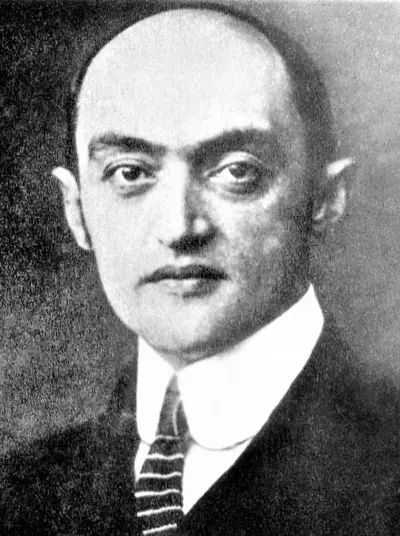
Joseph Aloïs Schumpeter was an Austrian political economist. Born in Moravia, he briefly served as Finance Minister of Austria in 1919. In 1932, he became a professor at Harvard University where he remained until the end of his career, eventually obtaining U.S. citizenship. One of the most influential economists of the 20th century, Schumpeter popularized the term "creative destruction" in economics.
