Angelo M. Codevilla Quotes
Profiling is a means for telling whom you have to worry about.
Angelo M. Codevilla, Author and National Security Scholar, Vice Chairman of the U.S. Army War College Board of Visitors, Senate Staffer of the Intellegance Commitee, C-SPAN, Book TV, October 12, 2010
Sourced by: Eigen's Political and Historical Quotations


He was advocating ethnic profiling in the War on Terror.

The Congressman was a rabid foe of immigration in general and possible illegal immigration in particular (See {614687}). As his colleagues were trying to improve the methods of identifying illegal workers at the job hiring stage, they were very concerned that law enforcment and some employers would make judgments about the likely criminal status of a person based on his/her ethnicity, race or other general superficial characteristics.
This is a very important quotation because it is an excellent example of the statement of the logic that advocates of racial profiling use. Wording may be different but the essence of the argument is always the same. The problem with the argument is twofold. First even if the statistical predictability is true, such statistical correlations were known by the Founding Fathers who nevertheless believed that it was better for the nation for the Government to follow due process and not base decisions on officials views of statistical tendencies regardless of how valid. However, even the statistics application is flawed. The problem is that there are many statistical relationships in our complex society. The vast majority of the use of racial profiling tends to only use those relationships which tend to reinforce the discriminatory biases. For example, the vast majority and proportion of the Americans who embezzle money are white males who have a college education. Yet there are few law enforcement officials who would say that we should pick white males with college emblems on their windshield, out and stop them as they might have stolen checks, business forms or other items associated with embezzlement. But those same people will advocate stopping Black males on highways under the likelihood that they are more likely to have illicit drugs. So if society profiled on EVERY characteristic that statistically related to crime, it would not be as unfair as when society picks and chooses those characteristics as this is where racism or other prejudice come into play. However, it is NEVER a good idea because it is so inefficient as a law enforcement method. Even though people of Irish extraction tend to be alcoholics more than other groups, once you start picking up Irish people to stop impaired driving, you find that most Irish are NOT alcoholics. Last there is usually huge variability within any ethnic or other group. Native Americans have an alcoholism succeptability that is even greater than the Irish. However, if one looks at each of the many Indian Reservations in Indian Country (Oklahoma), we find some reservations where almost every adult is an alcoholic and other reservations where there is no alcoholism at all. For the power of the state to generalize, that power is brought to bear on those Indians who would not be likely to be drunk as those which are.

The judge found that Blacks and Hispanics were stopped and frisked at a much higher rate than whites despite the fact that whites, when they were stopped and searched had a higher rate of carrying an illegal gun or illegal substances.


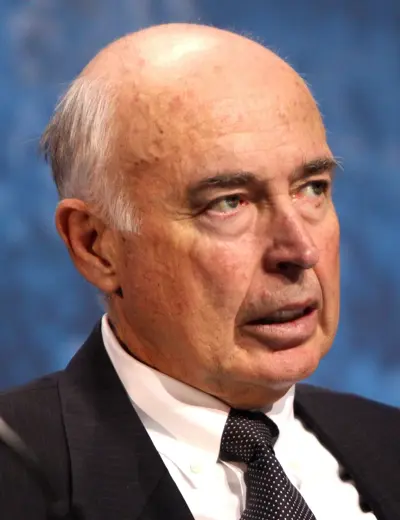
Angelo M. Codevilla is an Italian-US professor emeritus of international relations at what is now the Pardee School of Global Studies at Boston University. He served as a U.S. Navy officer, a foreign service officer, and professional staff member of the Select Committee on Intelligence of the United States Senate. Codevilla's books and articles range from French and Italian politics to the thoughts of Machiavelli and Montesquieu to arms control, war, the technology of ballistic missile defenses, and a broad range of international topics. Articles by Codevilla have appeared in Commentary, Foreign Affairs, National Review, and The New Republic. His op-eds have appeared in The New York Times, The Wall Street Journal, and The Washington Post. He has also been published in Political Science Reviewer, Intercollegiate Review, and Politica.
