Ben Bradlee Quotes
Politicians often refuse to talk about things on the grounds of national security. Most of the time it’s not national security; it’s national embarrassment.
Benjamin C. Bradlee, 1921-2014, Editor, The Washington Post, Interview, The History Channel, Inside the Presidency: Press Wars, February 26, 2000
Sourced by: Eigen's Political and Historical Quotations
_0_thumbnail_47x47.jpg "Statue of Robert Hall in Leicester.")
For many people the implication of this quotation is that there should be no government secrets withheld from the citizens who have the right to examine. Others argue that government may have temporary secrets to protect against foreign enemies for example, but that these must be declassified very promptly so that the citizens can examine the actions of their government in time to replace the government if they are not satisfied. Almost all government officials tend to reject the first implication out of hand, and grudgingly accept the second with their discretion controlling when declassification should take place. The problem of America is twofold. There is much over-classification (material kept secret that should not be at all), and the time till declassification is long in general and truly absurd in many cases. For example, there are documents from WWII that by 2013 had still not been declassified. See {591444}, {641317}, and {589105} for exemplar views. William Jennings Bryan introduced this principle into the American political dialogue. See {641027}.


Senator Dianne Feinstein, Chairman of the Senate Intelligence Committee, had released an unclassified Summary of the Committee Report on the CIA using torture and perverse treatment of suspect terrorists in the aftermath of the 9-11 attack on New York. Most Republicans argued vehemently that the Report should be classified and kept secret as the CIA behavior was so egregious, unpalatable, and morally reprehensible that there would be negative consequences including perhaps demonstrations and attacks against Americans in foreign countries. Moreover, Terrorist organizations would use the heinous CIA behavior as a recruiting tool for anti-American terrorists. McCain, who had himself been the victim of North Vietnamese torture cited the moral and ethical reasons to prohibit torture but also explained what has been proven over and over again that torture victims will tell the torturer any nonsense that they think the torturer might believe just to get obtain relief from the agony of the torture.

This quotation illustrates that government use of censorship and classification to cover up errors and mistakes in not just a modern phenomenon. It is a technique that government’s will gravitate to whenever they have the chance.


The George W. Bush White House which had tried to keep secret things that no other administration in history had attempted found itself in the position where it was leaking secret classified information. A Key staff member of the administration was indicted for covering up their leaking activities of secret material.


Every military establishment has secrets that they should maintain and are not always forthcoming with facts d explanations. However, the Pentagon is so large with so many layers that there are subgroups and vested interests, prevaricate and lie, even to their own superiors. No one knows how prevalent this is, but there have be a number of major incidents where the were lies and cover-ups—usually to prevent public embarrassment to some element of the military industrial complex.


See {594396} for his going a step further and advocating lying in the interest of the nation. Note that he does not consider the simple alternative of telling the voters and then fixing the problem.


FOIA is the acronym for The Freedom of Information Act.

Agree resigned from the CIA in protest to its political position.


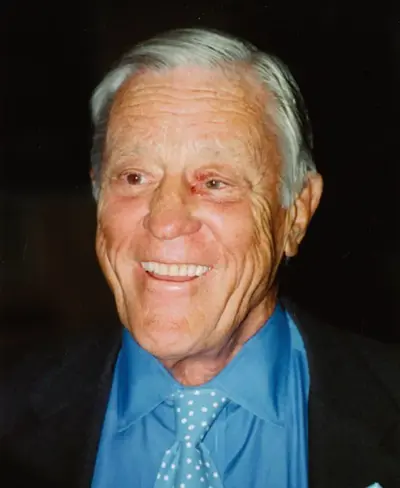
- Born: August 26, 1921
- Died: October 21, 2014
- Nationality: American
- Profession: Newspaper Editor
Benjamin Crowninshield Bradlee was one of the most prominent journalists of post-World War II United States, serving first as managing editor, then as executive editor at The Washington Post, from 1965 to 1991. He became a public figure when he joined The New York Times in publishing the Pentagon Papers and gave the go-ahead for the paper's extensive coverage of the Watergate scandal. He was also criticized for editorial lapses when the Post had to return a Pulitzer Prize in 1981 after it discovered its award-winning story was false.
