Roger Ebert Quotes
Political correctness is the fascism of the 90's, it is this rigid feeling that you have to keep your ideas and your way of looking at things within very narrow boundaries or else you'll offend someone. Certainly one of the purposes of journalism is to challenge just that way of thinking, and certainly one of the purposes of criticism is to break boundaries, that's also one of the purposes of art.
Ebert, Roger. "Roger Ebert's Journal." RogerEbert.com, Ebert Digital LLC, 1993.


In some universities would sometimes protest the selection of a commencement speaker and demonstrate. On some of these occasions the school administration withdrew the invitation. In addition to the problem described by Beckel, the university sells out its basic intellectual commitment to hear all ideas and points of view—regardless of how repugnant or evil. Commencement speakers tend to create a bigger problem because of the custom of the university granting the speaker an Honorary Degree. Whereas it is against the academic tradition to censor a speaker and having a speaker does NOT associate the University, the faculty or the students with the views of the speaker. But the granting of the Honorary Degree does imply an institutional approval and admiration of the speaker, and that is fair game for student protest. However in the beginning of the 21st century some extreme left wing students succeeded in intimidating spineless university administrators and trustees into censoring speech and the ideas of the speaker. This was typical behavior of the right wing brownshirts of the 1930s when it was the Fascists who were prohibiting certain speakers—usually left wingers. 80 years later it was the left wing extremists engaging in this undemocratic behavior.


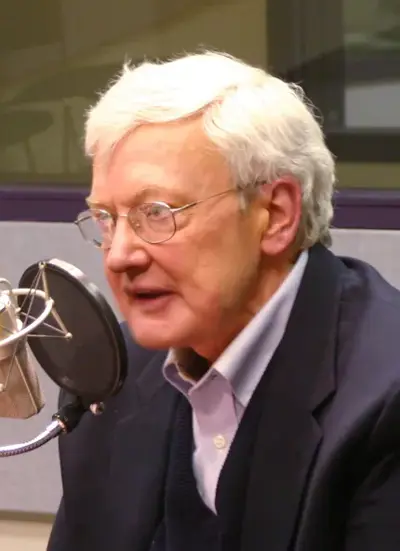
Roger Joseph Ebert was an American film critic, film historian, journalist, screenwriter, and author. He was a film critic for the Chicago Sun-Times from 1967 until his death in 2013. In 1975, Ebert became the first film critic to win the Pulitzer Prize for Criticism. Neil Steinberg of the Chicago Sun-Times said Ebert "was without question the nation's most prominent and influential film critic," Tom Van Riper of Forbes described him as "the most powerful pundit in America," and Kenneth Turan of the Los Angeles Times called him "the best-known film critic in America."
