Carlos Fuentes Quotes
People and their cultures perish in isolation, but they are born and reborn in contact with other men and women, with man and woman or another culture, another creed, another race.
Carlos Fuentes, 1928-2012, Mexican Author and Mexican Ambassador to France, Quoted in American Heritage, July/August 1996
Sourced by: Eigen's Political and Historical Quotations

He was one of the first democratic politicians of Germany who argued for rapprochement between France and Germany and may have been the first to suggest a European Union. Most of the world was very distrustful of German nationalism, and Stresemann presented one of the positive aspects of it. He died of a stroke in 1929 and the political vacuum was eventually filled by Hitler and the Nazis as the Weimar Republic was short lived. As democratic as Stresemann was, he still was preoccupied with German territorial control. See {620664}.


He was born in the Azerbaijan province of the Soviet Union and did most of his academic work in the United States. He is an example of a globalized scientist.

The inscrutability of the “oriental” was not racial as Nicholson and many others thought as most Asians who became Westernized tend to behave and respond to the Western culture in which they were brought up. However, many of the “oriental” cultures place a premium on inscrutability and avoidance of candor. Therefore, often they interact with Westerners and are unsure of the certainty of what they hear and observe. Or they hear it in ways that in their culture would not indicate strong feeling when that was intended by the Westerner. For example, Arab oratory tends to repeat something intensely felt several if not many times. A Western Diplomat who thinks he “makes himself clear” might slow down and emphasize each word distinctly—a sign of strong emphasis in Western oratory—but if only stated once or twice might not be taken as seriously meant. So communicating between cultures has often caused difficulties which people have assumed were racial characteristics but were cultural.
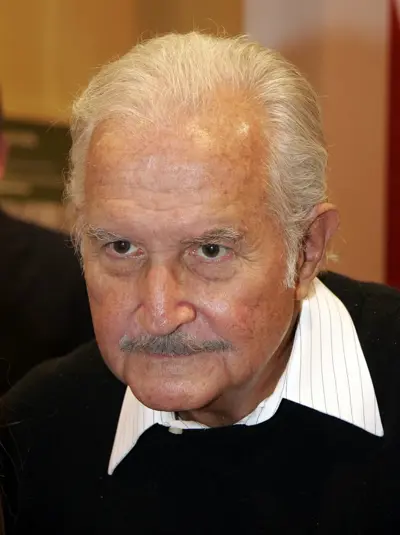
Carlos Fuentes Macías was a Mexican novelist and essayist. Among his works are The Death of Artemio Cruz (1962), Aura (1962), Terra Nostra (1975), The Old Gringo (1985) and Christopher Unborn (1987). In his obituary, The New York Times described Fuentes as "one of the most admired writers in the Spanish-speaking world" and an important influence on the Latin American Boom, the "explosion of Latin American literature in the 1960s and '70s", while The Guardian called him "Mexico's most celebrated novelist". His many literary honors include the Miguel de Cervantes Prize as well as Mexico's highest award, the Belisario Domínguez Medal of Honor (1999). He was often named as a likely candidate for the Nobel Prize in Literature, though he never won.
