Preneet Kaur Quotes
Pakistani prisoners are safe in Indian jails. We are a responsible government.
Kaur, Preneet. Statement to the press. The Hindu, 3 May 2013.


This letter to the Pasha (ruler) of Tripoli was contained in the original Arabic text of the American treaty with Tripoli in 1796. The letter was found between articles 10 and 12 with the eleventh article, as it appears in the English version by Joel Barlow, not included. Interestingly, the eleventh article of the Treaty of Tripoli has been the subject of attention in the debate over the separation of Church and State in America, see Barlow. The article’s lack of inclusion in the original version of the treaty is still a mystery.


At the time Pakistan was almost a failed state which had nuclear weapons. They took large amounts of American aid (military and civilian) and claimed that they were an ally in the War on Terror. On some occasions they deployed their troops against fundamentalist terrorists. On others they shielded terrorists and provided them with sanctuary from attack, intelligence and allowed terrorist leaders to not only live in Pakistan but operate their organizations from Pakistan. They supported radical Madrassas (religious schools) that taught hate and terrorism, and armed terrorists in the hopes that they could be used against their enemy India while the terrorists themselves killed more Pakistanis by far than the Indians ever did. The civilian government was subservient to the military which itself was subservient to the Intelligence Arm.


At the time of this quotation, he was the President of the America-Mexico Chamger of Commerce and his Mexican members were very anxious or disturbed by the prospect of Donald Trump being sworn in as President. Trump, during his presidential campaign, had courted many of the anti Hispanic voters and organizations, had labeled Mexican immigrants as "criminals" and "rapists", and had promised to build a very high wall accross the Mexican U. S, border and "make the Mexican's pay for it." Zapanta was also under consideration by President Elect Trump as the U. S. Ambassador to Mexico. These words were particualy well and delicately chosen to try and maintain his staning with with Trump and the Mexican leadership.

Although, on sever occasions Mao tried to reach out to the United States, the fact that he was leading a communist movement and Chiang Kai-shek, our recognized ruler of China hated Mao caused his overtures to be rebuffed. American military leaders knew very little about China and our intelligence was almost non-existent. They assumed that he was under the control of Russia and Joseph Stalin when in fact, the Russians wanted to oust Mao for not following Stalin’s communist orthodoxy. They succeeded in firing him as head of the party and replacing him with a committee of more loyal communists. Not only did the US rebuff Mau’s outreach attempts, but American money and military material financed 6 different military campaigns by Chiang to exterminate Mao and his communists.
None succeeded as the vast majority of the peasants supported Mao and his troops and provided support and information in Chiang’s attempts. Some historians believe we “bet on the wrong horse”.

This is radically different from most other Chinese corporations and most American or other country corporations for that matter who seek as much government business as they can get. Alibaba—the largest e-commerce company in the world, larger than Amazon.com and eBay put together--had hundreds of millions of on-line Chinese buyers and hundreds of thousands of Chinese retailers. A huge proportion of Chinese retail sales go through Alibaba.

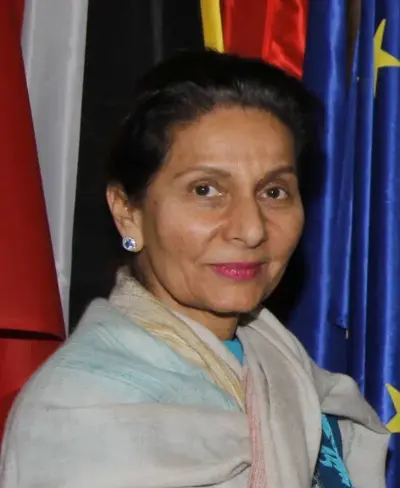
Preneet Kaur is an Indian politician who served in the Government of India as a Minister of State in the Ministry of External Affairs from 2009 to 2014. She is the wife of Amarinder Singh, who is now, 26th Chief Minister of Punjab. She joined the Congress party, to which her husband also belongs, and contested parliamentary elections repeatedly from the Patiala constituency. She won the elections of 1999, 2004 and 2009, but lost her seat in the elections of 2014 and made a comeback by winning again in 2019.
