John C. Calhoun Quotes
Our government is deeply disordered; its credit is impaired; its debt increasing; its expenditures extravagant and wasteful; its disbursements without efficient accountability; and its taxes (for duties are but taxes) enormous, unequal, and oppressive to the great producing classes of the country.
Calhoun, John C. "Speech on the Tariff Bill." The Works of John C. Calhoun, edited by Richard K. Crallé, vol. 4, D. Appleton and Company, 1854.


He was responding to the Democratic Slogan, “You never had it so good.” Over 50 years later the Democrats would be lamenting the Republican administration of George W. Bush for the huge debt and the fighting of the war in Iraq. This quotation is an excellent illustration of the fact that the two American political parties “flip-flop” positions over time to accommodate whether they are governing or in opposition. By 2005, the Republicans were in support of high deficits as they had produced the largest debt in American History. In the 1950s, Republican doctrine was to condemn all government deficits. And Republicans were the party of peace and the democrats were more aggressive in foreign policy. 50 years later, it was the Democrats calling for an end to the fighting (Iraq) and the Republicans supporting the war. Over the same period, the other two issues, taxes and inflation are still republican issues.


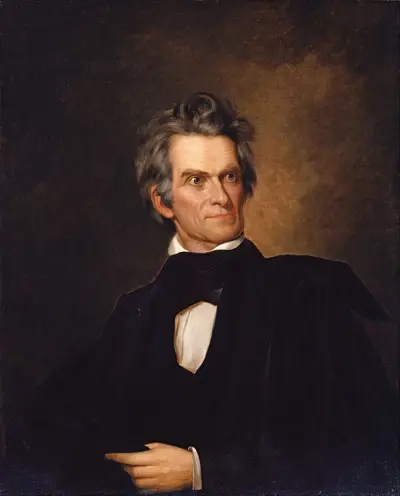
John Caldwell Calhoun was an American politician and political theorist from South Carolina who held many important positions including being the seventh vice president of the United States from 1825 to 1832, while adamantly defending slavery and protecting the interests of the white South when its residents were outnumbered by Northerners. He began his political career as a nationalist, modernizer, and proponent of a strong national government and protective tariffs. In the late 1820s, his views changed radically, and he became a leading proponent of states' rights, limited government, nullification, and opposition to high tariffs. He saw Northern acceptance of those policies as a condition of the South remaining in the Union. His beliefs and warnings heavily influenced the South's secession from the Union in 1860–1861.
