Stephen Lucius Gwynn Quotes
Our Constitution has affirmed that Gaelic is the national language. Yet there is scarcely one person in a thousand throughout Ireland who cannot speak English and scarcely one in ten who can speak Irish easily.
Stephen Lucius Gwynn, 1864–1950, Irish journalist, Protestant Nationalist Politician, Member of the British Parliament, “Ireland, One and Divisible”, Foreign Affairs, December 1924
Sourced by: Eigen's Political and Historical Quotations


Kenya and a number of other countries of the world were made up of regions and tribes who spoke many languages, Kenya, India and many others chose English and most people speak their tribal or regional language and English. In some countries French was chosen. Typically, the language selected for unity was the language of the colonizers of the area.

This was another of the radical reforms of Queen Victoria. Most counties were terribly sensitive about the language used by their citizens. Where there were different ethnic language groups, the dominant group tended to make the use and teaching of other languages illegal. So it was in Great Britain where Gaelic, traditionally spoken in Scotland and Welsh, spoken in Wales, were discouraged and not taught in the schools. The Queen shocked the right wing language nationalists with this letter making a major language and cultural reform in Great Britain. Victoria herself had learned a number of languages when she was a young girl and realized that the schools were the ideal place to develop multiple language facilities. Lansdowne promptly instituted the queen’s desired language reforms to the delight of the Scots and the Welsh. Rather than create disunity, the Scots and Welsh became more loyal to the Nation that recognized them, their culture and their rights.


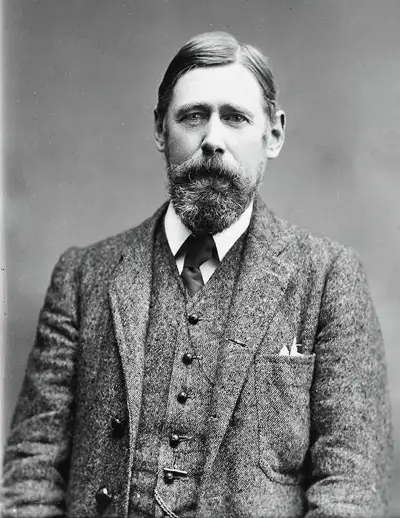
Stephen Lucius Gwynn was an Irish journalist, biographer, author, poet and Protestant Nationalist politician. As a member of the Irish Parliamentary Party he represented Galway city as its Member of Parliament from 1906 to 1918. He served as a British Army officer in France during World War I and was a prominent proponent of Irish involvement in the Allied war effort. He founded the Irish Centre Party in 1919, but his moderate nationalism was eclipsed by the growing popularity of Sinn Féin.
