Ibrahim Babangida Quotes
Our approach to economic development must be modern, focused and in tune with the global trend.
Babangida, Ibrahim. "Declaration of Interest for the 2011 Presidential Election." 13 Apr. 2010, Abuja. Address.


Large financial companies insist on profits at regular intervals and predictability whereas the innovative companies do not do well trying to meet those conditions and spending their time with the large finance company. While large financial companies were important to finance companies on the latter part of the 20th century, it was the smaller finance companies who financed most of the very important start-ups. By the 21st century, companies like Google and Facebook, made their own public stock offerings bypassing the financial industry. Many other smaller companies were financed via crowd sourcing which also bypasses the financial industry. His point is that the large successful companies can get the funds the need for growth without large finance companies. Smaller firms and startups can (and do) obtain funds through small finance firms or direct private investment. The large finance companies not only inhibit innovative growth he warns but they become such a dominant and controlling force that the industry becomes too big to fail, and the failure of a single large finance company could destroy the entire country’s economy. It happened to Island when their largest bank failed, and to the United States in the Meltdown of 2008.


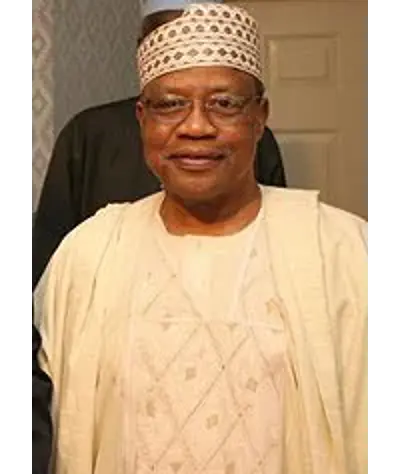
Ibrahim Badamasi Babangida GCFR popularly known as IBB; nicknamed, "Maradona" or "The Evil Genius", is a retired Nigerian Army general who ruled the Federal Republic of Nigeria from 27 August 1985 until his resignation in August 1993. He served as Chairman of the Armed Forces Ruling Council from 1985 to 1993 and Chief of Army Staff from 1984 to 1985; going on to orchestrate his seizure of power in a palace coup d'ètat against Muhammadu Buhari. He rose through the ranks of the Nigerian Army fighting in the Nigerian Civil War and at various times being involved in all the military coups in Nigeria, before advancing to the full-rank of a General and ultimately as Commander-in-Chief of the Armed Forces; and as an unelected President and military strongman from 1985 to 1993, ruling for an uninterrupted period of eight years. His years in power, colloquially known as the Babangida Era, are considered one of the most controversial in the military history of the country, and characterized by a burgeoning political culture of corruption in Nigeria, with Babangida and his regime estimated at least 12 billion dollars (23.9 billion today).
