Maimonides Quotes
One is also obligated to divide one's [learning] time into three: a third for learning the Written Torah, a third for learning the Oral Torah and a third in which to understand and comprehend what one learnt into the first two thirds by deriving facts from other facts
Maimonides, 1135-1204, [Rambam], Egyptian Physician & Rabbi, Chief Physician to Saladin, Leader of the Jewish Community of Cairo, The Laws Of Torah-Study
Sourced by: Eigen's Political and Historical Quotations

The Talmud is the commentary on the Biblical Books of Moses (The Torah) by the most learned scholars and rabbis in history.

Torah is the first 5 books of the Old Testament. Shammai’s school was a contemporary (and competitor) of that of Hillel. Most Rabbinic thought to this day has historically been based in the school of Hillel. Shammai was more strict and rigorous. There is no known surviving picture of Shammai. The graphic is a photograph of his tomb.

The Torah consists of the first 5 books of the Old Testament. For Orthodox Jews, the Torah is central and fundamental to their belief structure. In most democracies, a statement such as this might be made by a religions fundamentalist, but is unexpected when uttered by a high government official. However, in Israel there are several small religious political parties which oftem become very powerful when the major policies are of approximate equal strength. To entice them to join their coalition, the major parties give the religious parties cabinet positions. In this particular instance, Neeman’s party in the governing coalition could cause the government to fall, So a Justice Minister of a Modern Democracy can actually repudiate the laws and supreme court whenever they are not in harmony with “the word of God” and not lose his post or even be repudiated. There is probably no other country in the world where the Minister of Justice has repudiated the law of the land and the nation’s highest court.


The Torah, the first 5 Books of the Bible, are the statement of Jewish law. The Talmud is a compendium of commentary on Jewish Law—–reflecting the views of a number of learned Rabbis of old. In a sense, they are much like legal opinions from many different judges. They are disparate views and often contradict on another. Few if any other religions, have an official document like it. Other religions key documents are prescriptive, and where there are occasional contradictions , effort is made to rationalize. However Judaism has the strong religious tradition of dissent from singular dogma. Different Jewish sects and groups differ in what in the Talmud they follow, and Reform Jews, the largest group in America, assume a continuing discussion of the Talmud with the ancient Rabbis having no more weight in their opinions that modern thinkers—–theologians, philosophers, and others.
Saudi Arabian Newspaper. This and other absurd libels against Jews permeated a series of two articles she wrote in the newspaper. The lie that Jews use the blood of non-Jews to bake their holy bread has been a staple of anti-Semitic propaganda through the centuries. A few days thereafter, the editor of the newspaper, who had been away at the time of the publication himself published a rebuttal and repudiation. See Turki Abdullah al-Sudeiri: {593163}


Some of the Homopbobic Rabbis prevailed on the government to block adoptions by homosexual couples who are otherwise well qualified.

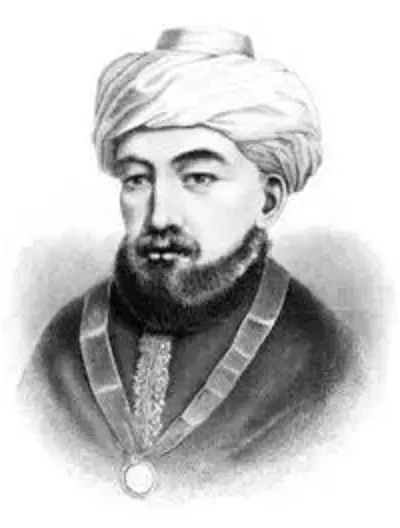
Moses ben Maimon (1138–1204), commonly known as Maimonides and also referred to by the acronym Rambam, was a medieval Sephardic Jewish philosopher who became one of the most prolific and influential Torah scholars of the Middle Ages. In his time, he was also a preeminent astronomer and physician, serving as the personal physician of Saladin. Born in Córdoba, Almoravid Empire (present-day Spain) on Passover eve, 1138 (or 1135), he worked as a rabbi, physician and philosopher in Morocco and Egypt. He died in Egypt on 12 December 1204, whence his body was taken to the lower Galilee and buried in Tiberias.
