William Falconer Quotes
Of whatsoever number a fleet of ships of war is composed, it is usually divided into three squadrons; and these, if numerous, are again separated into divisions.
Falconer, William. An Universal Dictionary of the Marine. T. Cadell, 1769.


In the first year of WWI, the British Fleet kept the German Fleet bottled up in port. As a result, the British had a very successful sea embargo against the Germans who rarely challenged the British fleet even though they had some major, powerful, capital ships. See {642234}. Meanwhile, the German ships were in no position to harass much less destroy Allied (French, Russian or English) shipping.

The sloop Margaretta was escorting 2 small merchant vessels came into the port of Machias, Massachusetts to purchase some lumber and firewood. However the commanding officer of Margaretta did not like the terms of the negotiations and threatened the town. An aroused and angry group of patriots then boarded and attacked the two merchant ships. The commander of Margaretta then maneuvered out of the port having lost the two small ships. But the Patriots were angry with the commander of the sloop and being excellent seamen who knew the local waters, used one of the merchant ships and a small local vessel to chase down the Naval sloop. They then boarded and captured Margaretta and fatally wounded the commander, James Moore. While Lexington was the first land victory for the patriots, this was the first sea victory and the Margaretta was the first British warship that was captured by the Patriots.

Koxinga had an overwhelmingly superior force, and wanted the Dutch to surrender and avoid bloodshed. The Dutch with their typical European colonial attitude, had great difficulty surrendering to “natives” even if outnumbered. Finally, the Dutch Commander agreed to surrender. Koxinga then established a Chinese Government on the Island and became a great hero of the Ming Dynasty. Note the graphic of the statue to him which is one of the very few Chinese memorial statues to a military hero showing him in action—very similar to European statues. Already Koxinga’s massed wooden junks with small cannon and fire torches had sunk one of the Dutch warships (they were not iron but had some iron plates on the deck to protect the gunners) and there were so many junks that the other Dutch ships sailed out to sea to avoid the Chinese huge number of junks.


He didn’t succeed until Mahan wrote his marvelous treatise.


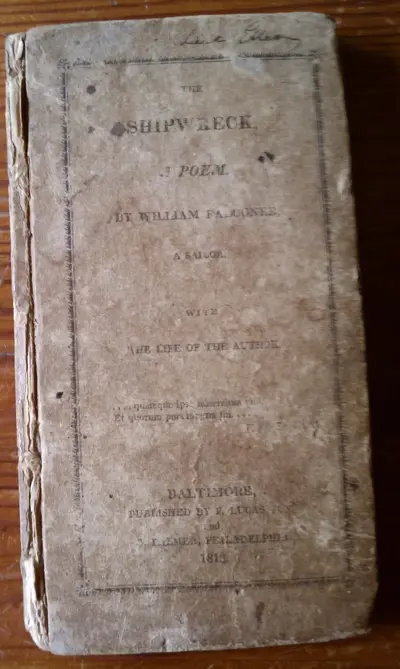
William Falconer was a Scottish epic poet concerned mainly with life at sea. He also compiled a dictionary of marine matters.
