Plutarch Quotes
Of the territory which the Romans won in war from their neighbors, a part they sold, and a part they made common land, and assigned it for occupation to the poor and indignant among the citizens…
Plutarch, c. 46-c. 120, Greek Historian & Biographer, Life of Tiberius and Caius Gracchus
Sourced by: Eigen's Political and Historical Quotations

Peter van der Kun. The Roman society had developed huge inequalities in the wealth of its citizens. Land was the measure of wealth as the value was produced by the farming of it. In an agrarian reform, the holdings of any one citizen was limited to 500 acres. In effect the Romans created a maximum of wealth. To the owners of the large tracts of land, this was a redistribution of wealth.

In every society where there had been past unjust ownership of land, all efforts of land reform were faced with the problem of having to dispossess the current “owners” who themselves had not been guilty of the crimes of their ancestors in unjustly obtaining the land originally. In America land reform was unworkable in most cases and the solution was usually a large monetary payment as compensation for the land.


His bill introduced in the House of Representatives. It did not pass.

In Scotland, large land owners who controlled most of the land discovered that they could earn more money from putting sheep on their lands than they could from rents charged to tenant farmers and simply evicted most of the tenant farmers who had no where to go. New Zealand, as a result of McKensie’s efforts passed laws guaranteeing 999 year leases at reasonable prices to any who wanted to farm.


Nelson was referring to the past. The industrial revolution created other forms of wealth and power as a huge factory could be built on a small piece of land. In farming, the yield is proportional to the acreage tilled. Not so in manufacturing. With the knowledge era, intellectual property could produce much wealth and power, and factory size and land ownership was not necessary.

Tibullus used the Latin “Roma eternal”. Rome is often referred to as “The Eternal City”.

The Diggers were a religious-economic movement that even today would be considered very radical. They advocated the right of the poor to go onto public lands and farm them—thus the name “Diggers.” Beyond their opposition to the private ownership of land to the exclusion of the poor, Winstanley and the Diggers promulgated another very modern doctrine: That the poor should take the responsibility and have the right to determinine how the society should provide for the poor. A version of this became one of the Mottos of the Poverty Program of 1964. See {616966}.


Armstrong was a Union military chaplain with the troops that had captured Petersburg, Virginia. Of particular interest in this quotation is his report on the attitude of the poor whites after the war had destroyed the economy of the area and reduced the former wealthy aristocrats to poverty.


This quotation shows the origin of a concept of Italy in a unified state. Further, the notion that all classes are members (citizens) of the new republic. The Roman Catholic Church was very much threatened by Rienzi and his republican notions and he was sentenced to death by a committee of Cardinals but was kept in prison by Pope Clement.

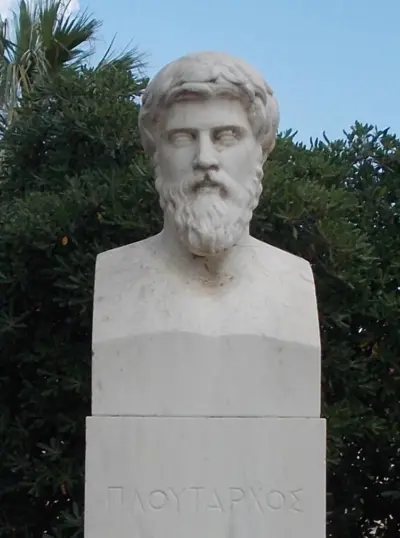
Plutarch (/ˈpluːtɑːrk/; Greek: Πλούταρχος, Ploútarchos; Koine Greek: [ˈplutarkʰos]; AD 46–after AD 119) was a Greek Middle Platonist philosopher, historian, biographer, essayist, and priest at the Temple of Apollo. He is known primarily for his Parallel Lives, a series of biographies of illustrious Greeks and Romans, and Moralia, a collection of essays and speeches. Upon becoming a Roman citizen, he was named Lucius Mestrius Plutarchus (Λούκιος Μέστριος Πλούταρχος).
